Last Updated: 23 October 2026
Quick Summary
To avoid document rejection abroad, confirm the receiving authority’s requirements in writing before you spend anything on notarisation and legalisation, then match their rules on apostille versus consular legalisation, certified translation and document age. Most document rejection cases stem from paperwork faults, not the document’s content, so check the original and requirements before submitting.
- Ask the receiving body in writing whether they need an apostille or full consular legalisation.
- Tell your notary the destination country so the notarial wording is correct first time.
- Order certified translations only after the original document has been notarised and legalised.
- If rejected, request the reason in writing and fix that specific issue before resubmitting.
- Keep scanned copies of everything and send originals by tracked delivery.
Table of Contents
- Why Documents Get Rejected Abroad (and How to Prevent It)
- Apostille Document Requirements: The Essential Checklist
- Common Apostille Mistakes That Lead to Rejection
- Certified Translation for Overseas Documents: Getting It Right
- What to Do If an Apostilled Document Is Rejected
- Step-by-Step: Preparing Documents for Submission
- When to Use a Notary Public for Cross-Border Documents
- Frequently Asked Questions
Why Documents Get Rejected Abroad (and How to Prevent It)
Document rejection abroad is the refusal of a document by a foreign authority because it fails that country’s legalisation, translation or certification rules, and most document rejection cases are avoidable. Gregory Mappledoram, Notary Public sees the same avoidable faults again and again. Most rejections are not about the content of the document. They are about the paperwork wrapped around it. (Source: Hague Conference on Private International Law guidance on the Apostille Convention)
Here is the uncomfortable truth: a document that is perfectly valid in one country can be worthless in another. Formatting, seals, signatures and language all need to match what the receiving authority expects.
Below, we explain exactly where things go wrong and how to fix each problem before you submit.
Apostille Document Requirements: The Essential Checklist
An apostille is a certificate that confirms the authenticity of a signature, seal or stamp on a public document. It is issued under the Hague Apostille Convention, which lets member countries accept each other’s documents without further embassy legalisation (HCCH).
The Hague Conference on Private International Law guidance on the Apostille Convention sets out the core rules. Not every country is a member, though. Some destinations still need full consular legalisation.
Documents That Typically Need an Apostille
- Birth, marriage and death certificates
- Powers of attorney
- Company board resolutions and registers
- Academic certificates and transcripts
- Court orders and sworn statements
- Notarised copies of passports or company documents
How to Confirm the Receiving Authority’s Requirements
Ask the receiving body in writing before you spend a penny on notarisation and legalisation. Confirm three things: whether they want an apostille or full consular legalisation, whether they need a certified translation, and how recent the document must be. A short email now saves weeks later.
Common Apostille Mistakes That Lead to Rejection
The most common apostille mistakes are predictable, see the table below for some examples and hot to prevent these.
|
Mistake |
Why It Causes Rejection |
How to Prevent It |
|---|---|---|
|
Certifying a copy instead of the original |
Some authorities only accept originals |
Ask the receiving body which they need |
|
Wrong notarial wording |
Foreign officials expect specific language |
Tell your notary the destination country at the start of the instruction |
|
Missing or damaged seal |
Apostille cannot be verified |
Keep documents flat and dry |
|
Out-of-date document |
Some authorities set age limits |
Check validity rules before submitting |
|
Apostille from the wrong authority |
Certificate is not recognised |
In the UK only the Foreign, Commonwealth & Development Office can issue an apostille |
A notary who understands the destination jurisdiction will phrase the certificate correctly the first time. That single step prevents most of the problems above.
Certified Translation for Overseas Documents: Getting It Right
Certified translation for overseas documents means a translation prepared and signed by a qualified translator, confirming it is a true and accurate rendering of the original. Many authorities reject translations that are accurate but not properly certified.
Watch for these faults:
- The translator’s statement is missing or unsigned
- The translator’s credentials are not stated
- The translation is not bound to a copy of the original
- Names and dates do not match the source document exactly
Order the translation only after the original has been finalised. If the notarial certificate changes, the translation must change too. Rebuilding a translation costs time you may not have.
What to Do If an Apostilled Document Is Rejected
If an apostilled document is rejected, do not resubmit it unchanged. Ask the receiving authority for the rejection reason in writing. The fault is usually one of four things: wrong legalisation type, poor translation, incorrect wording, or a document that is too old.
Once you know the reason, fix that specific issue and resubmit. If the authority will not explain, ask a notary to review the document against the destination country’s known requirements. A second opinion often spots the fault in minutes.
Step-by-Step: Preparing Documents for Submission
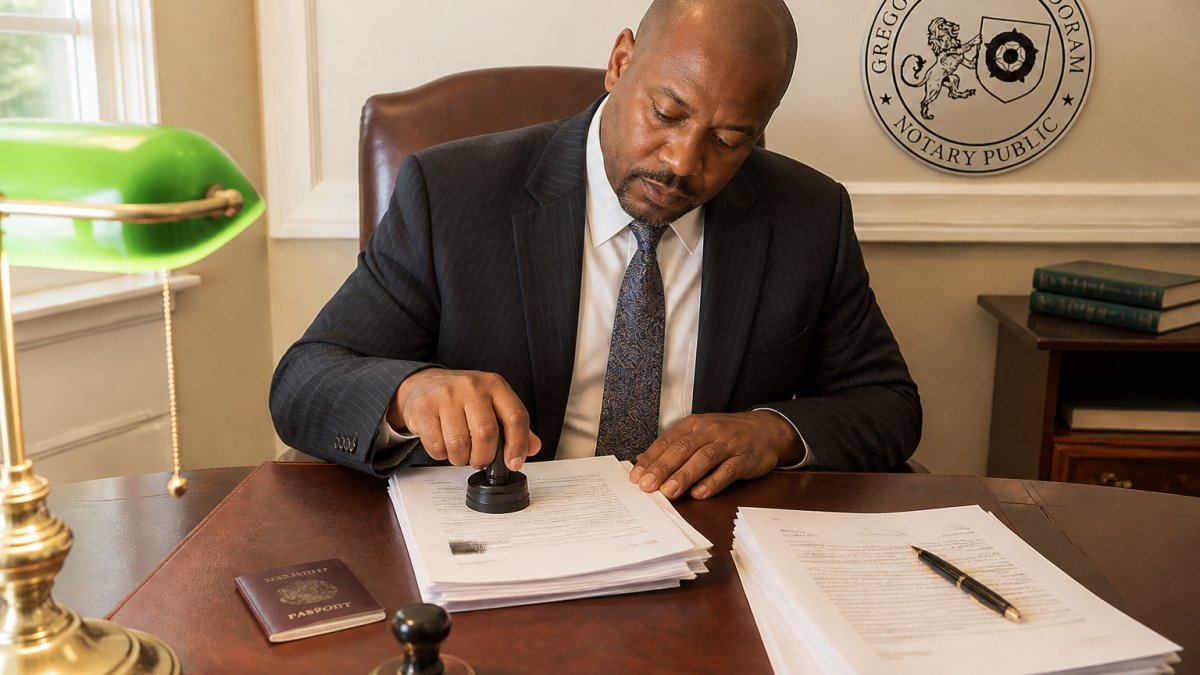
Follow this sequence to cut your risk of rejection.
- Confirm the requirement. Get the receiving authority’s rules in writing.
- Check the original. Make sure names, dates and content are correct and consistent.
- Book the notary. Tell them the destination country and how the document will be used. Sign the document in the presence of the Notary not before the appointment.
- Legalise. Arrange the apostille or consular legalisation through the correct authority. The Notary will deal with this for you in most cases.
- Translate if needed. Use a certified translator and check the certificate is signed.
- Copy and archive. Keep scanned copies of everything you submit.
- Send by tracked delivery. Keep proof of posting and receipt.
Total time: plan for several working days at minimum. Urgent cross-border closings need same-day notarisation to protect the timeline. Our team handles time-pressured files regularly, drawing on more than 18 years of notarial practice.
When to Use a Notary Public for Cross-Border Documents
Use a notary public when a foreign authority needs proof that a signature is genuine, a document is authentic, or a copy matches the original. Notaries are officers of the law, and their acts carry weight with overseas bodies.
You will usually need one for powers of attorney, company resolutions, property transactions and immigration paperwork. A notary can also confirm that the wording suits the destination country, which is where most rejections begin.
Gregory ensures that every file is prepared with the destination jurisdiction in mind. Documents are checked against local requirements before they leave the office, and cover is backed by professional indemnity and fidelity insurance.
Frequently Asked Questions
Why might a document be rejected abroad?
A document can be rejected abroad for several reasons: missing or incorrect apostille, outdated signatures, name mismatches between documents, lack of a certified translation, or failure to meet the receiving authority’s specific format requirements. Even minor discrepancies, such as a middle name missing on one document but present on another, can trigger rejection. Always verify the destination country’s exact requirements and ensure all details match across every page before submission.
Does an apostille guarantee that a document will be accepted abroad?
No. An apostille confirms the authenticity of the signature and seal on a public document, but it does not guarantee acceptance by the receiving authority. The destination country may have additional requirements, such as certified translations, specific forms, or legalisation steps beyond the apostille. Always check with the receiving authority or a local legal professional to confirm what is needed for your specific document and jurisdiction.
What should I do if my apostilled document is rejected abroad?
If an apostilled document is rejected, first obtain the exact reason in writing from the receiving authority. Then review the document for errors such as incorrect names, missing pages, or translation issues. You may need to have the document re-notarised, re-apostilled, or translated by a certified translator. In complex cases, seek advice from a notary public experienced in cross-border documentation to ensure the corrected version meets all requirements before resubmission.
Do I need to have a document translated before legalisation?
Invariably, no. Most authorities require a certified translation to be submitted of the original notarised and legalised document. Always confirm the requirements with the receiving authority, but if in doubt do the certified translation at the end. Use a certified translator for overseas documents and check whether the translator must be approved by the destination country’s embassy or consulate.
Rejection letters cost more than time. They stall transactions, unsettle clients and delay closings you cannot move. The fix is preparation: confirm the rules, get the wording right, and have every document checked before it travels. London Notary Services offers same-day service, more than 18 years of notarial experience and a practical understanding of commercial context. Contact Gregory to get your documents prepared correctly the first time.
