Blog

  • Legalising Singapore Property Documents: A Step-by-Step Guide

    Legalising Singapore Property Documents: A Step-by-Step Guide

    Last Updated: November 8, 2026

    Quick Summary

    Legalising Singapore property documents means certifying them so Singapore authorities accept them as genuine. Private documents signed in the UK usually need notarisation first, then official certification and consular legalisation where the receiving party requires it, while Singapore-issued documents follow the Singapore route.

    • Confirm the receiving party’s requirements in writing before starting, as bodies vary on what certification they accept.
    • A UK-signed power of attorney is a private document and generally begins with notarisation by a UK notary public.
    • An apostille obtained for one country can be rejected in Singapore if consular legalisation is expected instead.
    • Common rejection causes include signing before notarisation, the wrong certification route, and missing certified translations.
    Not sure which route your document needs?Gregory reviews your Singapore property documents and confirms the correct legalisation route before you submit.

    Book a notary appointment

    Table of Contents

    What Legalisation Means for Singapore Property Documents

    Legalisation is the process of certifying a document so that authorities in another country will accept it as genuine. For Singapore property documents, that means proving the signature, seal, or certified copy is authentic before a Singapore court, registry, or law firm will act on it.

    The route is rarely a single stamp, and the exact sequence depends on the document and the receiving party. Get the sequence wrong and the receiving party can reject the paperwork outright.

    We regularly see the same pattern: clients assume one certificate covers everything. It does not. The Foreign, Commonwealth & Development Office guidance on legalisation and apostilles sets out the official UK route, and it starts with a notary, not with a government office.

    Below, we break down exactly which documents need legalising, how the route changes by document type, and the mistakes that cause rejection.

    Singapore Property Document Checklist: What Usually Needs Legalising

    Start with a simple question: who is signing, and where will the document be used? That answer decides the checklist. For a property transaction involving Singapore, the documents that most often need legalising fall into three groups: documents signed in the UK for use in Singapore, Singapore-issued documents needed abroad, and documents that may not need legalisation at all.

    Documents signed in the UK for use in Singapore

    • Power of attorney for a buyer, seller, or attorney acting remotely
    • Proof of identity, such as a passport copy certified as a true copy
    • Deeds and transfer documents signed outside Singapore
    • Statutory declarations and sworn statements
    • Company documents, including board resolutions, registers of members, and certificates of incorporation, where a corporate entity is the party
    • Mortgage or charge documents where a UK lender or individual is involved
    • Certified translations where the original is not in English

    Singapore-issued documents needed abroad

    • Title deeds or land registry extracts for use in UK proceedings or by a UK lender
    • Singapore court orders relating to property
    • Singapore company documents for a UK bank or solicitor
    • Singapore powers of attorney where the attorney is in the UK

    Documents that may not need legalisation

    • Documents for information only, such as marketing brochures or draft contracts not intended to be relied upon
    • Documents already legalised for the same destination and within the receiving party’s validity period
    • Documents where the receiving party accepts a simple certified copy without notarisation or apostille

    Not every item on this list needs the same treatment. A passport copy is certified; a power of attorney is notarised and then legalised. Treating them identically wastes time and money. The receiving party in Singapore decides how far along the chain you need to go, so ask them in writing before you start. For a step-by-step walkthrough of the legalisation route, see our guide on the steps to legalise documents for Singapore use.

    Public vs Private Documents and Why the Difference Decides the Route

    A public document is one issued by a court, government department, or official registrar. A private document is everything else: contracts, powers of attorney, company resolutions, and declarations signed by individuals or officers.

    The distinction matters because public and private documents take different paths. Private documents almost always need notarisation before anything else happens. Public documents may go straight to certification, depending on the issuing authority.

    Documents Signed in the UK for Use in Singapore

    A UK-signed private document, such as a power of attorney for a Singapore property purchase, follows this order:

    1. Notarisation by a UK notary public
    2. Official certification of the notary’s signature and seal by way of apostille issued by the FCDO
    3. Consular legalisation, where the receiving party requires it

    The receiving party in Singapore decides how far along that chain you need to go. Ask them in writing before you start.

    Singapore-Issued Documents Needed Abroad

    The reverse direction is different. A Singapore-issued document used in the UK or elsewhere may need authentication by the appropriate authority in Singapore before a foreign authority will accept it. Singapore private documents generally need notarisation by a Singapore notary first.

    Do not assume a UK notary can legalise a Singapore-issued document. Direction of travel changes the whole process.

    Document Direction

    First Step

    Who Handles It

    UK-signed, for Singapore use

    Notarisation

    UK notary public

    UK public document, for Singapore use

    Official certification

    UK certifying authority

    Singapore-issued, for overseas use

    Notarisation in Singapore

    Singapore notary public

    Step 1: Notarisation Before Any Legalisation

    Notarisation is commonly the first step for private documents. A notary public verifies identity, witnesses the signature, and attaches a notarisation certificate confirming the document is genuine.

    Bring the following to the appointment:

    • The original document, unsigned
    • Valid photo identification, such as a passport
    • Evidence of your authority to sign, where relevant
    • Any instructions from the receiving party about format

    The notary checks who you are, confirms you understand what you are signing, and then witnesses execution.

    If you are at the start of the process, our guide on the steps to legalise documents for Singapore use sets out the full route in order.

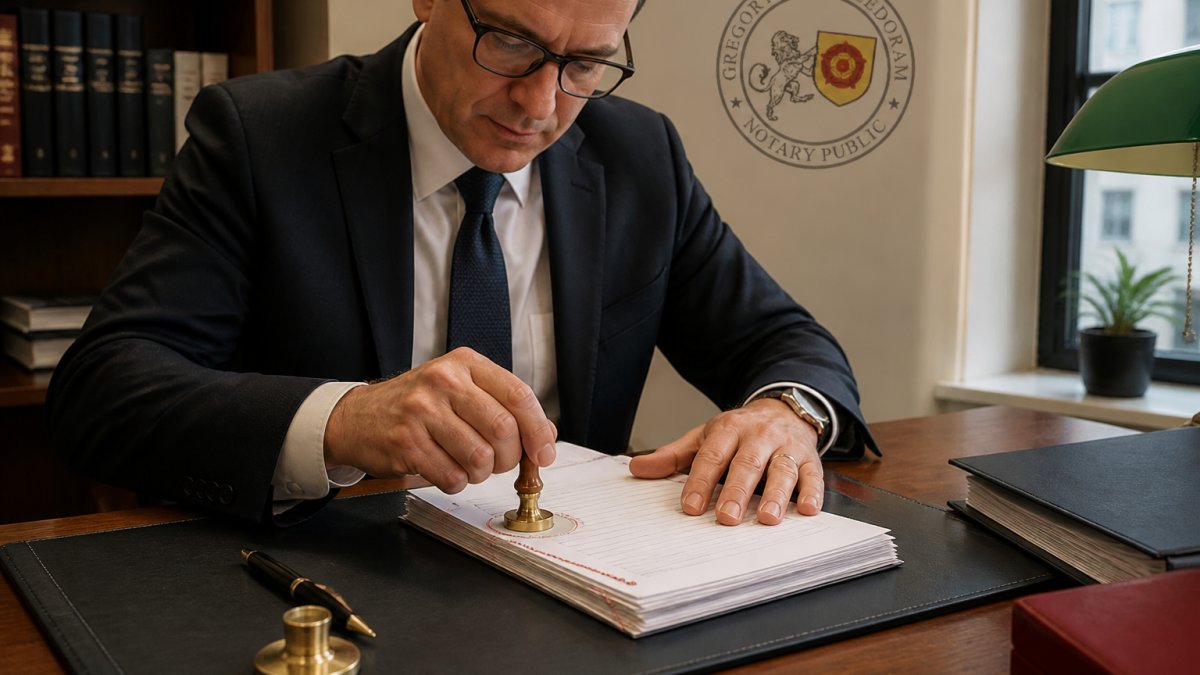
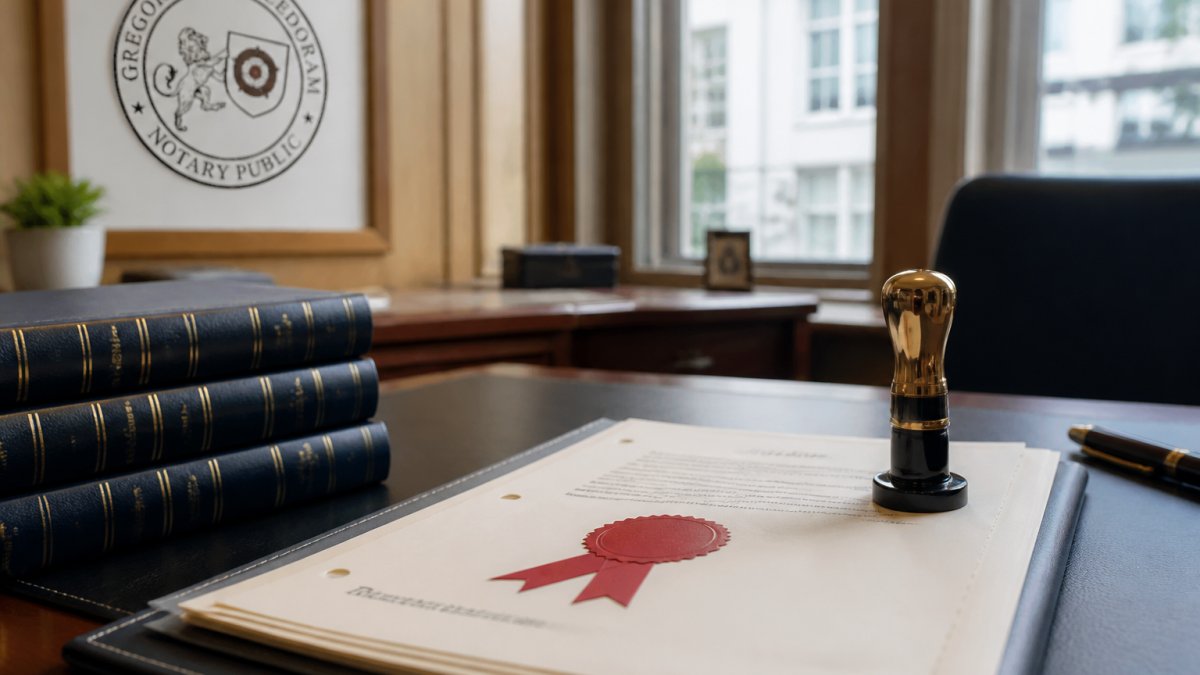
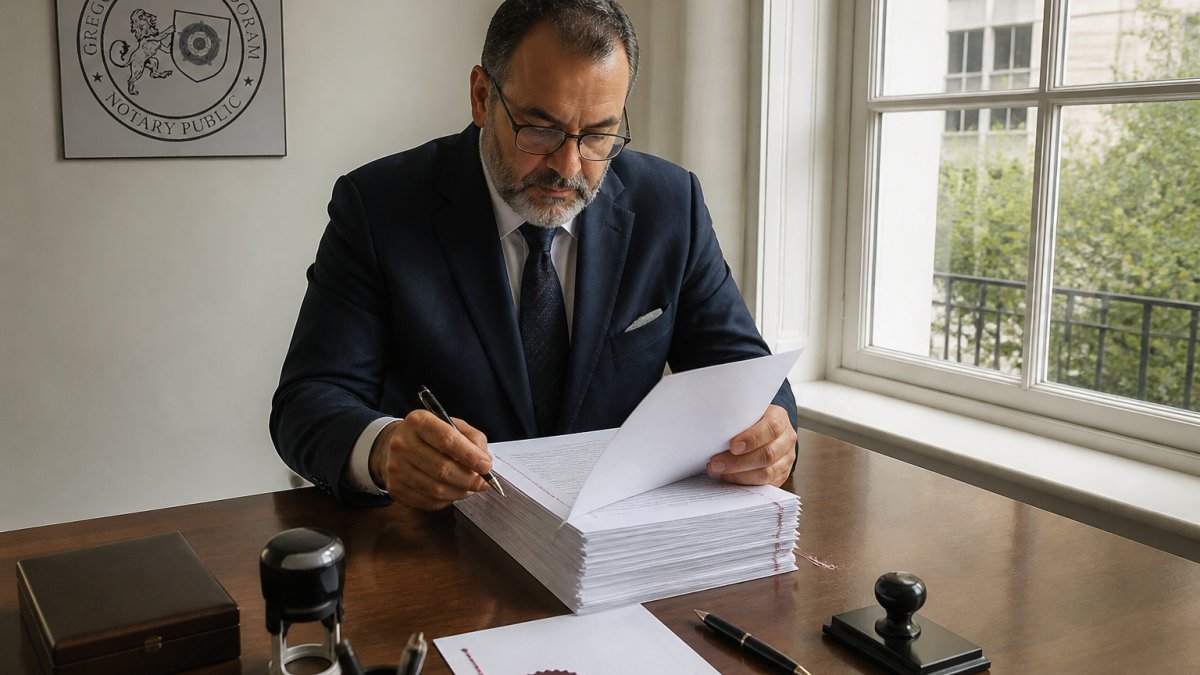
    Notary public authenticating Singapore property documents with a formal seal in a traditional wood-panelled office.
    Notary public authenticating Singapore property documents with a formal seal in a traditional wood-panelled office.

    Singapore Document Apostille Requirements Explained

    An apostille is a certificate used between countries that are party to the Hague Apostille Convention. It confirms the signature on a public document is genuine. The critical point for Singapore property work is that whether an apostille is the right route for a Singapore-bound document depends on what the receiving Singapore authority will accept. Whether an apostille is accepted depends entirely on what the receiving Singapore authority will take.

    Use this decision framework before you pay for anything:

    1. Confirm the receiving party’s requirement in writing. Ask the Singapore conveyancer, bank, land authority, or court whether they will accept an apostille, consular legalisation, or something else. Receiving bodies vary, so confirm which certification they require.
    2. Check the document type. Public documents issued in the UK (such as court orders or registry extracts) may be eligible for an apostille, but that apostille may still not be accepted in Singapore. Private documents (such as powers of attorney) almost always need notarisation first, and then consular legalisation if the receiving party requires it.
    3. Check the direction of travel. A UK document for Singapore use follows the UK route. A Singapore document for UK use follows the Singapore route.
    4. Check the wording of the requirement. Some receiving parties specify “legalised by the Singapore High Commission” or “apostilled”, and the two are not interchangeable. Following the wrong one leads to rejection.

    Watch out: an apostille obtained for one country can be rejected in Singapore if the receiving authority expects consular legalisation. Do not assume that because the UK issues apostilles, a Singapore-bound document will be accepted with one. If you are at this stage, our apostille and legalisation service can help you confirm the correct route for your document. Pricing depends on the document and the route, so contact Gregory Mappledoram, Notary Public for a quote.

    Singapore Property Power of Attorney Legalisation

    A power of attorney for a Singapore property transaction is the document most likely to cause problems. It is a private document, it authorises someone to act on property worth significant money, and Singapore receiving parties scrutinise it closely.

    The Singapore property power of attorney legalisation route generally begins with notarisation, with further certification where the receiving party requires it. The document must be executed correctly, with the right wording for the powers granted.

    Watch out: a power of attorney should be executed in the notary’s presence, as the notary must witness execution.

    For a dedicated service covering this document, see our notarised power of attorney for property page.

    Common Rejection Reasons and How to Avoid Them

    Rejection usually comes down to process, not the document itself. The most frequent causes we see:

    • Signed before notarisation. The document was executed without the notary witnessing it.
    • Wrong certification route. An apostille was obtained when consular legalisation was required, or vice versa.
    • Certified copy instead of original. The receiving party wanted the original document.
    • Missing or uncertified translation. The document was not in English and no certified translation was supplied.
    • Outdated requirements. The receiving party changed its rules and the applicant followed old guidance.
    • Illegible seals or signatures. A poor-quality copy or a faint stamp caused the authority to doubt authenticity.

    The fix for most of these is a single habit: get the receiving party’s requirements in writing before you start, and check them again before submission. For deeper guidance, read our article on how to avoid document rejection abroad.

    Contact Gregory to Get Your Documents Right First Time

    The hardest part of legalising Singapore property documents is not the stamping. It is knowing which route your specific document needs before you pay for the wrong one.

    Gregory Mappledoram has over 18 years of notarial experience and 25 years as a General Counsel, bringing commercial context to a property transaction as well as the paperwork. Gregory offers same-day service for time-pressured matters, and documents are prepared to work in the destination jurisdiction.

    You get protection through professional indemnity and fidelity cover, and support that in-house legal teams and referring solicitors can rely on.

    Contact Gregory to discuss your Singapore property documents.


    If a Singapore property transaction is moving faster than your paperwork, the risk sits with the document, not the deal. Gregory can review what you have, confirm the right route, and notarise on the same day where needed. Same-day appointments are available, and every document is checked against the receiving party’s requirements before it leaves the office.

    Contact Gregory Mappledoram, Notary Public to book an appointment or ask a question about your documents.

    Frequently Asked Questions

    Do Singapore property documents need an apostille?

    It depends on the direction the document travels. The route depends on the direction the document travels and on what the receiving party requires. Always confirm the exact route with the receiving party before you submit anything.

    Does a document need notarising before it is legalised for Singapore?

    In many cases, yes. Check the requirements of the receiving party and the relevant official source before you proceed.

    How long does it take to legalise documents for Singapore?

    Timing depends on the route and the receiving authority. Build the legalisation stage into your transaction timetable early, and confirm current processing times with the relevant authorities before you book anything.

    Can I use a scanned copy of a legalised property document?

    Ask the receiving party before you rely on a scan, and keep the original legalised set intact and unbound.

  • The Ultimate Guide to Notarising Board Resolutions Abroad

    The Ultimate Guide to Notarising Board Resolutions Abroad

    Last Updated: 5 November 2026

    Quick Summary

    Notarising board resolutions for foreign jurisdictions means a notary verifies the signatory’s identity, signature and authority, then the document is authenticated by apostille or consular legalisation as the destination requires. Confirm the receiving authority’s requirements in writing before anything is signed.

    • A notary verifies identity, signature and authority, but does not draft the resolution or advise on foreign law.
    • Only a notary can notarise, a solicitor or company secretary can merely certify a copy.
    • Apostilles suit Hague Convention countries, destinations outside it need consular legalisation instead.
    • Order more certified copies than you expect, as reordering means a second authentication cycle.
    • Some authorities impose a maximum age on the notarisation or apostille, often measured in months.

    Table of Contents

    When Board Resolutions Need Notarising for Use Abroad

    A board resolution authorising a cross-border transaction will usually be rejected by a foreign registry, bank or court unless its execution has been properly authenticated.

    The trigger is almost always a receiving authority in another country. According to Dentons’ analysis of cross-border corporate documentation, digital-format corporate resolutions reproduced on paper are formally admissible under simplified regimes for foreign companies, provided they are duly apostilled.

    Rejections of this kind often follow the same pattern: the resolution is drafted correctly, signed correctly, and then fails at the border because nobody checked what the destination country actually requires.

    Notary Requirements for Board Resolutions

    Notary requirements for board resolutions are narrower than most people assume. A notary does not draft your resolution and does not advise on the company law of the destination country. The notary performs a notarial act: verifying the document, the signatory and the authority behind the signature.

    What a Notary Public Verifies

    A notary public verifies three things. First, the identity of the person appearing before them, usually by passport or driving licence plus proof of address. Second, that the signature is genuine and was applied in the notary’s presence. Third, where a company is involved, that the signatory holds the position and authority the resolution claims.

    As guidance from the notarial profession puts it, notaries do not draft legal documents for foreign jurisdictions, their role is verification and authentication, not legal counsel for the destination country’s requirements. That distinction matters when a foreign registry rejects a document for a reason that was never a notarial issue.

    Notarisation Versus Certification

    Notarisation is a notarial act performed by a notary public, evidenced by a notarial certificate, seal and signature. Certification is a narrower act: confirming that a copy matches an original, or that a signature appears on a document.

    The two are not interchangeable. A certified copy of a board resolution satisfies an internal file. It will not satisfy an overseas registry that has asked for a notarised document.

    Documents Needed to Notarise a Board Resolution

    Documents needed to notarise a board resolution fall into three groups: the resolution itself, proof of who is signing, and proof that the company authorised them to sign. Most rejected filings fail on the third group, not the first two, so treat the governance evidence as the substantive part of the preparation rather than an afterthought.

    Notary examining signed board resolutions beside a company secretary with identity documents
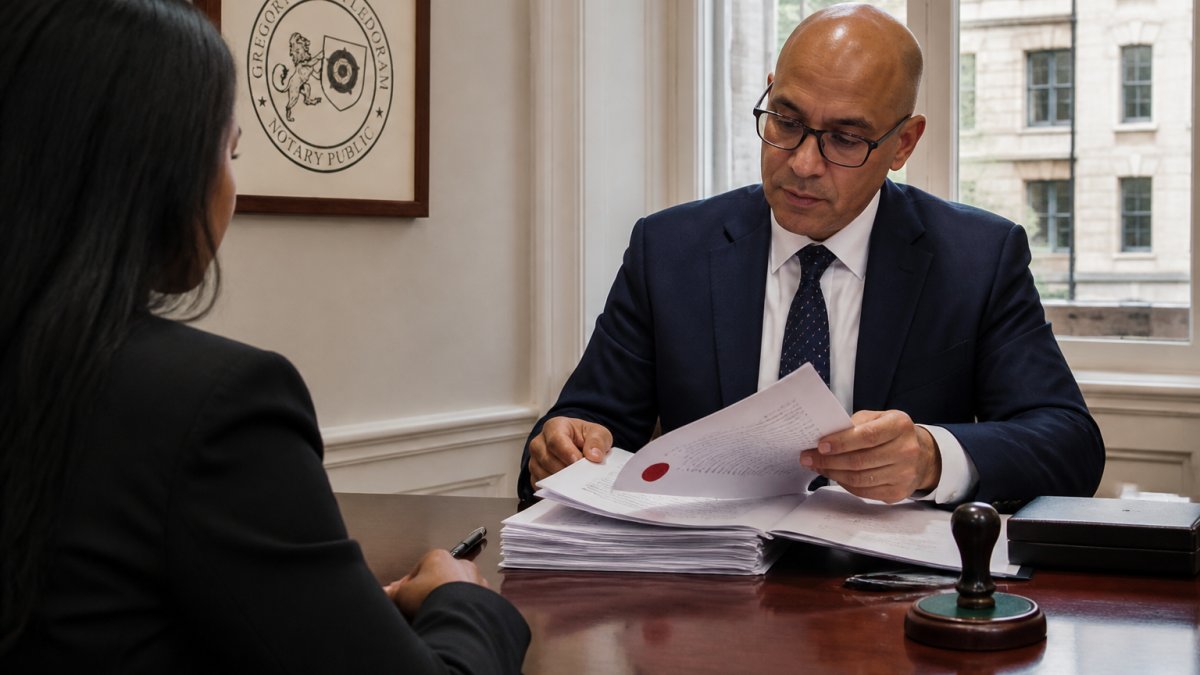
    Notary examining signed board resolutions beside a company secretary with identity documents

    The resolution and the signatory

    1. The board resolution or written resolution, signed by the director or officer who will appear.
    2. Photographic identification for each signatory, plus proof of address.
    3. Evidence of the signatory’s position: a current appointment record, register of directors or equivalent company record.
    4. Any power of attorney under which the signatory is acting, together with the resolution that conferred it.

    Governance evidence that the decision was validly taken

    A notary cannot authenticate a signature that sits on an invalid decision. Before the appointment, assemble the material that shows the board was properly constituted and the resolution was properly passed:

    • The company’s articles of association, or the extracts governing board composition, quorum and execution.
    • Board minutes or a supporting resolution confirming the decision was taken at a duly convened meeting, or adopted as a written resolution under the Companies Act 2006.
    • A conflicts register or a note confirming that interested directors were excluded from the quorum and vote where the articles or the company’s constitution require it.

    A common pattern is a resolution that is internally consistent but conflicts with the articles, for example, a sole director signing where the articles require two, or a written resolution adopted without the required majority. A notary will not cure that, and a foreign registry will not overlook it.

    The receiving authority’s own requirements

    1. The receiving authority’s checklist or filing guidance, in writing where possible.

    That last item is the one people forget. A foreign bank’s onboarding checklist and a registry’s filing guidance often specify wording, certification type, translation requirements or a preferred notarial certificate that differ from what the notary would otherwise produce.

    Watch out: a resolution that names the transaction vaguely (“the proposed acquisition”) rather than identifying the counterparty, the asset and the authority granted will often be sent back even where the notarisation and apostille are technically correct.

    Choosing the Right Authentication Route: Apostille for Board Resolutions

    An apostille for board resolutions is the correct route for destinations that are party to the Hague Apostille Convention. For countries outside it, you need consular legalisation instead.

    Use this decision tree:

    Situation

    Route

    What Happens

    Destination is a Hague Apostille Convention member

    Notary, then FCDO apostille

    Single certificate replaces embassy legalisation

    Destination is outside the Convention

    Notary, then FCDO apostille, then embassy or consulate

    Sequential authentication by each authority

    Receiving authority asks only for a certified copy

    Certification, no notary

    Copy verified against the original

    Document is a digital resolution reproduced on paper

    Notary, then FCDO apostille

    Admissible where the simplified regime applies

    Destination requires translation

    Notary, FCDO apostille, then certified translation

    Order matters; confirm the sequence

    Legal Visa Services’ 2026 market commentary notes increased demand for formal attestation of board resolutions for Middle Eastern jurisdictions, with particular focus on Ministry of Foreign Affairs attestation for the UAE and Saudi Arabia.

    FCDO Apostille Versus Embassy Legalisation

    The Foreign, Commonwealth & Development Office issues apostilles for documents intended for Convention countries. Embassy legalisation is the older, slower process: the FCDO authenticates the notary’s signature, then the destination country’s embassy or consulate authenticates the FCDO’s.

    Timelines vary by destination and by embassy workload, so the current route and expected turnaround should be confirmed for your specific country before the appointment. For a fuller walkthrough of the corporate document route, see our guide to the apostille process for corporate documents.

    Getting a Certified Copy of a Board Resolution

    A certified copy of a board resolution is a copy verified as a true reproduction of the original, and how many you need depends on how many authorities will handle the file. Registries routinely retain the document; banks often want a second copy for their own records.

    Contact Gregory →

    Order more certified copies than you think you need. Reordering later means a second appointment and a second authentication cycle, which is where cross-border deals lose days.

    Remote, Electronic and Digitally Signed Resolutions

    Remote notarisation is available for many corporate documents, but it is not universally accepted abroad.

    The workable pattern is a digital-to-paper workflow: the resolution is executed and notarised remotely, then reproduced on paper for authentication. If you want to arrange a remote appointment, our electronic notarisation service covers the practicalities.

    Where a wet-ink signature is mandatory, plan for an in-person attendance. Discovering this after the apostille has been issued means starting again.

    Rejection Risks, Translations and How to Avoid Delays

    Rejection almost never happens because the notary did something wrong. It happens because the document did not match what the receiving authority expected. The most useful way to think about rejection is not as a list of errors but as a mismatch between three things: the document, the destination and the authority receiving it.

    The recurring failures

    • The wrong authentication route, usually an apostille sent to a non-Convention country, or consular legalisation ordered for a destination that would have accepted an apostille.
    • A signature applied before the notary’s appointment rather than in their presence.
    • A missing or expired appointment record for the signatory, or a register entry that does not match the capacity in which they signed.

    Watch out: a resolution signed and dated before the notarial appointment, then presented as if signed in the notary’s presence, will be spotted and will taint the whole filing.

    Jurisdiction-aware checks before you commit

    Requirements differ between destination countries in ways that are not obvious from the face of the document. Before any appointment, confirm four things with the receiving authority or its published guidance:

    1. Authentication level. Does the authority require notarisation alone, notarisation plus an apostille, or full consular legalisation?
    2. Certificate wording. Does the authority prescribe the notarial certificate, or accept the notary’s standard form? A handful of registries publish specimen wording.
    3. Translation. Is a certified translation required, and must it be prepared before or after authentication? The sequence matters because some authorities will only authenticate the English original and expect the translation to follow, while others want the translation bound to the authenticated document.
    4. Validity window. Some authorities impose a maximum age on the notarisation or apostille, typically measured in months. A resolution authenticated too early can expire before it is filed.

    A practical decision sequence runs: identify the receiving authority, obtain its written requirements, confirm the authentication route, confirm the translation sequence, then book the notary. Doing this in the reverse order, notarise first, ask questions later, is where most delays originate.

    Translations and multilingual handling

    Where a certified translation is required, use a translator who will certify the translation and, where the destination requires it, swear or attest it before a notary or solicitor.

    If the destination language uses a different script or naming convention, confirm with the receiving authority whether transliteration is acceptable or whether a sworn translation is required.

    For a deeper treatment of the common failure points, read our guide on how to avoid document rejection abroad.

    Booking Your Board Resolution Notarisation

    The most reliable way to avoid a rejected filing is to have the destination requirements checked before anything is signed.

    Gregory Mappledoram, a Notary Public with over 18 years of notarial practice and 25 years as a General Counsel can assist you with all your notarial requirements, including board resolutions.

    Get in touch via our contact page to discuss your resolution, or read our dedicated guide to notarising board resolutions for foreign use for the underlying scenario in more depth.

    Frequently Asked Questions

    Does a board resolution need to be notarised for use overseas?

    It depends on the receiving authority. Many overseas registries, banks and courts will not accept a resolution on trust; they want a chain of authentication they recognise. Notarisation is often the first link in that chain, followed by an apostille or embassy legalisation. Check the destination jurisdiction’s requirements before you book, because a resolution notarised correctly but legalised by the wrong route can still be rejected.

    What documents does a notary need to notarise a board resolution?

    Bring the resolution itself, your proof of identity, and evidence of your authority to sign, such as the articles of association and company records showing your appointment. A notary also needs to see the board minutes or written resolution that authorised the decision. If the document is for a foreign jurisdiction, bring any instructions from the receiving authority so the notarial certificate matches what they expect.

    Does a notarised board resolution also need an apostille?

    For countries that are party to the Hague Apostille Convention, an FCDO apostille is usually the next step after notarisation. For countries outside the Convention, embassy or consular legalisation is typically required in addition to the apostille. The apostille confirms the notary’s signature and seal, not the commercial content of the resolution. Confirm the route with the receiving authority before submitting, as the wrong route causes delays.

    Can a notary certify a copy of a board resolution?

    Yes. A notary can certify a copy of a board resolution as a true copy of the original, which is useful when the receiving authority needs a certified copy rather than the original document. The notary examines the original, compares it with the copy and attaches a notarial certificate. If the document will be used abroad, the certified copy may then need an apostille or legalisation.

    Who can sign a board resolution before a notary?

    The person who signs must have authority to execute the resolution under the company’s constitution and the board’s approval. That is usually a director or the company secretary, but the articles of association and any board minutes will confirm. The notary verifies identity and signing authority, so bring evidence of your appointment and the resolution that authorised you to sign.

    How long does it take to notarise and legalise a board resolution?

    Notarisation itself can be completed quickly where the documents and identity checks are in order. The apostille or legalisation stage adds time and depends on the FCDO or the relevant embassy’s processing, which varies. Build in extra time for translations and for any corrections the receiving authority requests. Confirm current turnaround with your notary and the legalisation provider before a closing date.


    If a cross-border closing is approaching, the authentication route should be settled before the board signs. London Notary Services handles same-day appointments, checks the destination requirements against your documents, and prepares the resolution to work in the receiving jurisdiction. Get started with London Notary Services and file with confidence.

  • Can I Use a UK Power of Attorney Abroad?: What to Check

    Can I Use a UK Power of Attorney Abroad?: What to Check

    Last Updated: 4 November 2026

    Quick Summary

    A UK power of attorney is not automatically valid abroad, because recognition is decided by the law of the country and the institution reviewing it. Some foreign banks or offices accept an English Lasting Power of Attorney after checking it, while others refuse it and ask for a local document instead. Confirm the requirements with the receiving body before you rely on it.

    • Ask the receiving institution in writing which recognition route it applies and what evidence it needs.
    • Confirm whether your document is an English, Scottish or Northern Irish power of attorney before approaching anyone overseas.
    • Check whether the destination is a Hague Apostille Convention country, as this decides between an apostille and wider legalisation.
    • Follow the order of notarisation, apostille or legalisation, and certified translation, because the sequence matters.
    • If refused, request the reason in writing and consider taking local legal advice in that jurisdiction.

    Table of Contents

    Many people assume a UK power of attorney will simply work once it leaves England and Wales, but acceptance abroad is never automatic. Whether a Lasting Power of Attorney (LPA) made in the UK is recognised depends on the law of the country where you present it, and on the institution reviewing it. Before relying on one overseas, you need to know what the destination expects, how the document must be prepared, and what to do if it is refused.

    Why a UK Power of Attorney Does Not Automatically Work Overseas

    A Lasting Power of Attorney is a legal document created under the law of England and Wales. An LPA is a legal document under the law of England and Wales, and it does not carry automatic authority in other countries.

    The practical consequence is that the document’s status is decided locally. A bank in one country may accept an English LPA after reviewing it, while a government office in another may refuse it outright and ask for a local document instead. Treat the LPA as a starting point, not a guarantee of access.

    How Foreign Recognition of a UK LPA Is Decided

    Recognition is decided by the foreign authority or institution that receives the document, applying that country’s own legal framework. There is no single international instrument that obliges a foreign bank, land registry or court to accept an LPA made under the law of England and Wales. The receiving body will typically ask three questions: does our law recognise foreign powers of attorney at all; what formalities must the document satisfy; and is the document properly authenticated and translated. The answers vary by country and, within a country, by institution.

    Which UK document do you actually hold?

    The document you hold determines what a foreign authority is being asked to recognise:

    • England and Wales: a Lasting Power of Attorney (property and financial affairs, or health and welfare), registered with the Office of the Public Guardian.
    • Scotland: a continuing power of attorney (financial) or a welfare power of attorney, registered with the Office of the Public Guardian (Scotland).
    • Northern Ireland: an Enduring Power of Attorney registered with the Office of Care and Protection, or a Lasting Power of Attorney under the Mental Capacity Act (Northern Ireland) 2016.

    A foreign institution that has seen an English LPA may not recognise a Scottish or Northern Irish equivalent, and vice versa. Confirm which document you hold before you approach anyone overseas, and describe it accurately in correspondence.

    Financial versus health and welfare

    Recognition often turns on what the attorney is being asked to do. Property and financial affairs LPAs are the type most commonly presented to overseas banks, solicitors and land registries, and the receiving institution will usually assess whether the attorney has authority to deal with the specific asset or account. Health and welfare LPAs are rarely accepted directly by foreign hospitals or care providers, because clinical decision-making is governed by the law and professional standards of the country where treatment takes place.

    What ‘recognition’ actually looks like in practice

    A foreign institution may accept the LPA in one of several ways, and it helps to know which you are asking for:

    • Direct acceptance: the institution reviews the LPA and acts on it, sometimes after notarisation, apostille and translation.
    • Conditional acceptance: the institution accepts the LPA but requires additional evidence, such as a certificate of law, a solicitor’s opinion, or confirmation from the Office of the Public Guardian.
    • Registration or court approval: some jurisdictions require the foreign power of attorney to be registered with a local court or authority before it can be used, particularly for land transactions.
    • Refusal and substitution: the institution declines the LPA and asks for a local power of attorney made under its own law.

    Ask the receiving institution, in writing, which of these it applies and what evidence it needs. Where the answer is unclear, take local legal advice in that jurisdiction before relying on the document. A common pattern is that a short written query to the institution’s legal or compliance team saves weeks of rejected submissions later.

    Watch out: an attorney’s residence abroad does not change any of this. An overseas attorney presenting an English LPA faces exactly the same recognition test as an attorney based in England and Wales, residence is a separate question from whether the document will be accepted.

    Can an Attorney Living Abroad Act Under a UK LPA?

    An attorney who lives overseas is not the same as using an LPA abroad. The first question is whether the attorney can act for the donor at all. The second is whether a foreign institution will accept the LPA when the attorney presents it there.

    A common mistake is to assume that an attorney’s residence in another country solves the recognition problem. It does not. The institution still reviews the document under its own rules, so an overseas attorney may face the same refusals as anyone else. Confirm both points separately before making arrangements.

    Notarising Documents for International Use

    Notarisation is often requested when a UK document is going to be used overseas. You can see the service for this document type on notarised power of attorney for property.

    Contact Gregory →

    Signed UK power of attorney document with a fountain pen and official seal on a notary’s desk in London
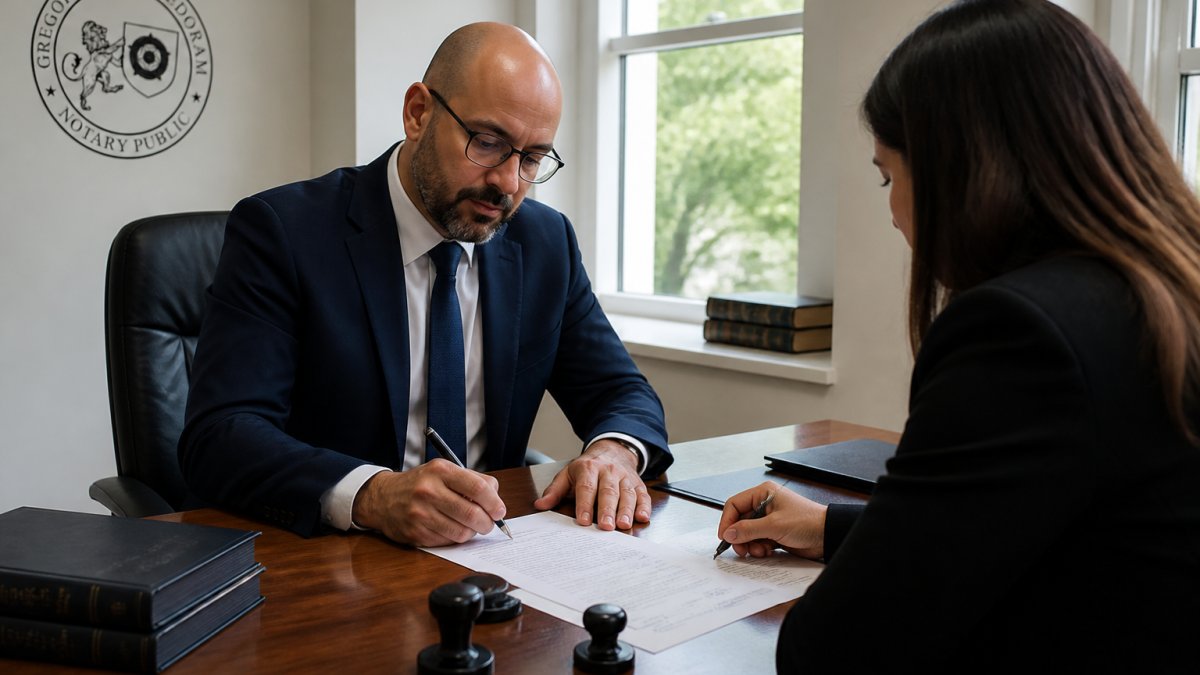
    Signed UK power of attorney document with a fountain pen and official seal on a notary’s desk in London

    When you book, bring the Power of Attorney document, the signatory’s identification and a clear list of the institutions the document will be presented to. Our corporate and private notarial services cover documents authenticated for use in any country. Ask those institutions what certification they expect, because requirements differ.

    Legalising Documents for Use Abroad: Apostille and Beyond

    Once a UK document has been notarised, many countries require further authentication before they will accept it. You can arrange this through our apostille and legalisation service. The route depends on whether the destination is a party to the Hague Apostille Convention. Our apostille and legalisation process explained walks through each stage in detail.

    Apostille for Hague Convention countries

    For countries that are party to the Convention, an apostille certificate is usually sufficient. Check the relevant UK authority’s current published process, turnaround and fees before you plan, as these can change.

    Legalisation for countries outside the Convention

    For countries outside the Hague Convention, an apostille is not enough. The document may need further legalisation through the appropriate UK office and then the embassy or consulate of the destination country. Some destinations also require translation after legalisation, and a few require the translation itself to be certified or notarised. The sequence matters: presenting a document before the correct authentication is complete is a common reason for rejection.

    The document-preparation workflow

    A practical order of steps, which you should confirm with the receiving institution before you begin, is:

    1. Confirm requirements in writing with the overseas bank, court, land registry or agency, ask specifically whether it needs notarisation, an apostille, embassy legalisation, a certified translation, or a certified copy.
    2. Check the document is in order, including that the attorney’s authority covers the act in question and all local and English law formalities are complied with.
    3. Arrange certified copies if the institution will not accept the original. A notary can certify copies, but confirm whether the recipient wants the apostille on the original or on a certified copy.
    4. Notarise where required, with the signatory present and identification available.
    5. Obtain the apostille or legalisation in the correct order, FCDO first, then embassy or consulate where applicable.
    6. Commission a certified translation if the destination requires one, and check whether the translator must be approved or sworn in that country.
    7. Allow for processing time at each stage, including postal delays, and keep copies of everything you send.

    Translation and certified copies

    Translation requirements are set by the receiving authority, not by the UK. Some accept a translation by any competent translator; others require a certified or sworn translation, and a few require the translation to be legalised as well.

    Watch out: the order of notarisation, apostille, embassy legalisation and translation is not interchangeable. A document legalised in the wrong sequence, or translated before the apostille is issued, is frequently rejected and has to be redone.

    The route a document takes depends on whether the destination is a party to the Hague Apostille Convention, as summarised below.

    Destination

    Route

    Key difference

    Hague Convention country

    FCDO Apostille certificate

    Usually sufficient on its own

    Country outside the Convention

    FCDO Apostille, then embassy or consulate

    An apostille alone is not enough

    Destination requiring translation

    Certified or sworn translation

    Requirements set by the receiving authority

    Any destination

    Notarisation first

    Does not by itself make a document valid abroad

    Checklist for Destination Countries and Overseas Banks

    Use this checklist before you rely on a UK LPA abroad:

    • Confirm the destination country’s rules on recognising foreign powers of attorney
    • Ask the overseas bank or institution what documents, certification and translations it requires
    • Check whether a local power of attorney is expected instead
    • Confirm whether notarisation, an apostille or wider legalisation is needed
    • Ask whether a certified translation must be provided
    • Get written confirmation of acceptance where possible
    • If refused, request the reason in writing and consult local legal counsel

    Preparing Your LPA for Use Abroad and Next Steps

    Start by identifying the country, the institution and the exact purpose, whether that is banking, property or a personal matter. Then gather the original LPA, confirm which type it is (property and financial affairs, or health and welfare), and work through the checklist above.

    For help with notarising documents and preparing them for international use, contact Gregory Mappledoram, Notary Public. You can reach the office directly to arrange a same-day appointment in Canary Wharf or the City of London. Contact Gregory to book an appointment or ask a question about your document.

    Frequently Asked Questions

    Is a UK Lasting Power of Attorney valid in other countries?

    A UK Lasting Power of Attorney is legally binding in England and Wales, but it does not grant authority automatically in other countries. Whether a foreign bank, court or authority accepts it depends on that country’s own law and practice. Recognition is not automatic, so the practical step is to ask the institution in advance what it requires. Many authorities will want the document notarised, legalised and translated, and some will ask for a local document instead.

    Do I need an apostille for my Power of Attorney?

    An apostille is often required when a UK document is presented in a country that is party to the Hague Apostille Convention, but not every destination requires one. An apostille confirms the authenticity of the signature and the authority of the signing official, and it is usually issued after the document has been notarised. Check with the receiving authority before you start, because asking for the wrong certificate causes delay and extra cost. Gregory can advise on the sequence for your destination.

    Will foreign banks accept a UK Power of Attorney?

    Foreign banks set their own acceptance criteria, and many will review a UK power of attorney carefully before acting on it. Expect requests for a certified copy, proof that the document is in force, notarisation or legalisation, and a certified translation if it is not in the local language. Some banks prefer their own form. Contact the institution early, confirm its requirements in writing, and allow time for the paperwork.

    What is a notarised Power of Attorney?

    A notarised power of attorney is a document whose signature has been witnessed and verified by a notary public, who confirms the identity of the signatory and that the signing took place as recorded. Notarisation does not decide whether the document is valid for a particular purpose, but it gives foreign authorities a reliable record to check. Notarisation is often the first step before legalisation or an apostille is added.

  • Steps to Legalise Documents for Dubai

    Steps to Legalise Documents for Dubai

    Last Updated: 2 November 2026

    Quick Summary

    To legalise documents for Dubai, UK papers go through three stages in a fixed order: notarisation, then an FCDO apostille, then with UAE Embassy attestation in London and MOFA attestation in the UAE. Documents issued outside the UK must start the chain in their country of issue instead.

    • Personal and commercial documents both need the full authentication chain before a UAE authority will accept them.
    • A notary must witness a power of attorney signature in person, you cannot sign first and certify afterwards.
    • Educational certificates may need verification by the awarding institution before notarisation, the most common cause of stalled files.
    • Work backwards from your deadline and add a buffer for one rework cycle, as a single rejection resets that stage.
    • Most rejections trace to a missing chain link, an uncertified translation or a name mismatch with the passport.

    Table of Contents

    Which Documents Need Legalising for Dubai

    Documents bound for the UAE fall into two groups: personal papers and commercial papers. Personal documents include birth certificates, marriage certificates, decrees absolute and degree certificates. If you are unsure how to legalise documents for Dubai, start by identifying your document type, because the route differs at the first stage. (Source: legalisation services)

    The UAE generally requires public documents to go through a chain of authentication before a UAE authority will rely on them. For UK documents, that chain typically involves a notary, the Foreign, Commonwealth & Development Office (FCDO) and the UAE Embassy in London.

    Original documents are preferred. Some UAE bodies accept a certified copy, but you should confirm the requirement with the receiving authority before you spend money on certification.

    The Dubai Document Attestation Process, Step by Step

    The Dubai document attestation process has three stages, and they run in a fixed order. Skip one and the next will fail. Before you pay anyone, use the decision tree below to confirm which route your document needs, because the first stage, and sometimes the whole chain, changes depending on where the document was issued and what type it is.

    Decision tree: which route does your document need?

    Work through these questions in order. The first “yes” determines your route.

    1. Was the document issued outside the UK? If yes, the chain starts in the country of issue, not in London. You will usually need authentication by that country’s competent authority, then attestation by the UAE Embassy accredited to that country, then MOFA in the UAE. An FCDO apostille is not the starting point for a foreign-issued document, and in many cases an apostille alone will be rejected. Confirm the correct embassy (the UAE has embassies in most capitals but not all) before posting anything.
    2. Is it a public document issued by a UK registrar or court (birth, marriage, decree absolute, probate)? If yes, you normally start with a certified copy or an official extract, then notarisation certification, then FCDO apostille, then UAE Embassy attestation, then MOFA. Some registrars issue a certified copy that don’t need any notarial intervention e.g. a birth certificate; others require the notary to see the original first. Where a document issued by the UK Government (other than a birth, marriage or death certificate) that does not have a wet ink signature, will need to be notarised first.
    3. Is it a private document you or your company will sign (power of attorney, board resolution, company register, commercial invoice)? If yes, the notary must witness the signature in person, you cannot sign first and have it certified afterwards. Then FCDO apostille, UAE Embassy attestation, MOFA.
    4. Is it an educational certificate (degree, transcript, professional award)? If yes, the awarding institution may need to confirm the award before notarisation. Some UAE authorities also require the certificate to be verified by the awarding body or a recognised verification service before the embassy will attest it. Build this step into your plan, it is the most common cause of a stalled educational file. Gregory Mappledoram Notary Public will verify the award with the issuing academic institution as part of the notarisation process.
    5. Is it a digital or e-signed document? If yes, check with the receiving UAE authority before you start. Many UAE bodies still require a wet-ink original or a certified paper copy, and an electronically issued record may need to be printed and certified by the issuing body first. Do not assume an e-signature will be accepted at the embassy stage.

    If more than one route applies, for example a UK-issued degree being used by a company, follow the strictest route, which is usually the one requiring institutional verification plus the full chain.

    Notary public stamping a stack of official documents to legalise documents in a professional London office
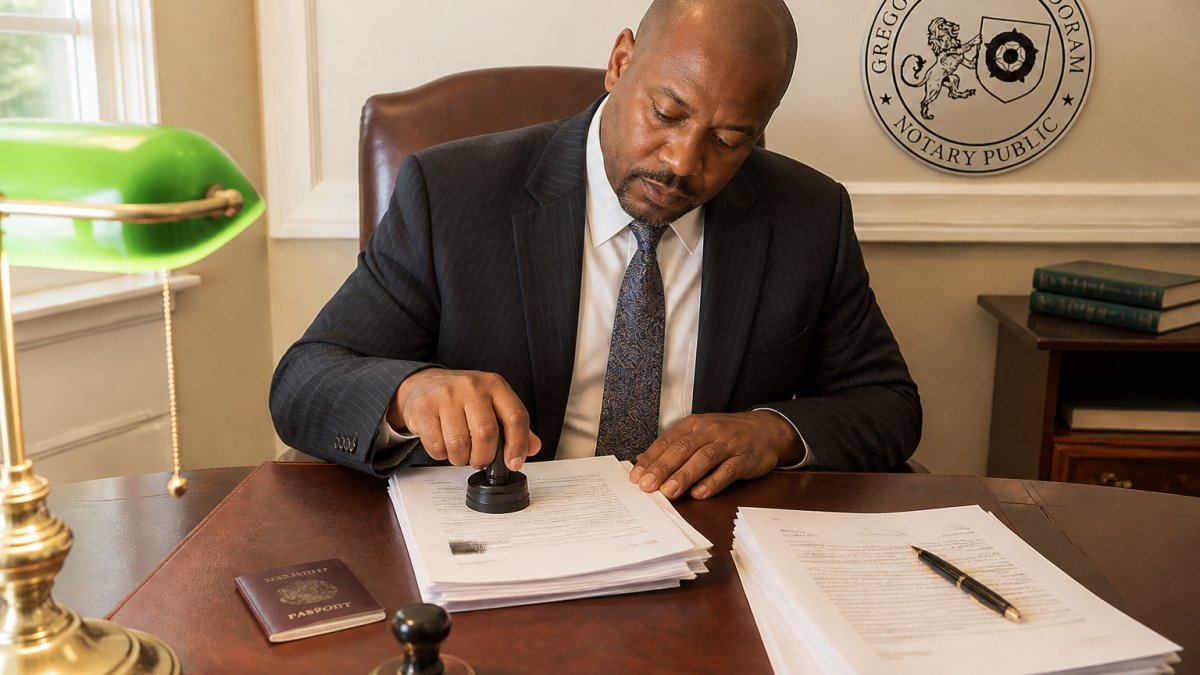
    Notary public stamping a stack of official documents to legalise documents in a professional London office

    Step 1: Notarisation Certification

    A notary public certifies that the document is genuine and that the signature is genuine.

    Bring photo ID and the original document. A notary cannot act on a photocopy alone.

    Step 2: FCDO Apostille and UAE Embassy Attestation

    The FCDO checks the notary’s signature and adds an apostille certificate. The document then goes to the UAE Embassy in London for consular attestation. The UAE Embassy has moved towards an electronically issued legalisation page, according to Rouse’s 2026 report on the new consulate legalisation format, so confirm the current format when you submit. Our apostille and legalisation service explains the options if you would rather have this handled for you.

    Two mechanics matter here. First, the FCDO apostille is a check of the notary’s signature, not of the document’s contents, if the underlying document is defective, the apostille will still be issued and the rejection will happen later, at the embassy or in the UAE. Second, the embassy stage is where document type matters most: commercial documents, powers of attorney and educational certificates are often reviewed more closely than birth or marriage certificates, and the embassy may query wording, seals or translations.

    Step 3: MOFA Attestation in the UAE

    The UAE Ministry of Foreign Affairs (MOFA) applies the final attestation once the document arrives in the country. The MOFA attestation service page sets out the online route: the applicant selects the destination country, uploads the original digital document issued by the competent authority and confirms a declaration.

    MOFA is also where the receiving authority’s own requirements surface. A free-zone authority, a court, a land department and a bank may each ask for a different combination of attestations, translations and copies.

    What the full chain costs, stage by stage

    Costs vary by document, provider and speed. Typical cost components include the following:

    • Notarisation or solicitor certification: a fee set by the notary and depends on the type of document.
    • FCDO apostille: a government fee, plus postage or courier costs.
    • UAE Embassy attestation: a consular fee that differs by document type, plus any agent handling fee. The UAE legalisation is one of the more expensive legalisation processes so getting the document right first time saves wasted costs.

    Ask any provider for a written, itemised quote that separates government fees from service fees.

    Documents issued outside the UK

    If your document was issued in another country, the UK chain is the wrong chain. The document normally needs authentication in its country of issue, then attestation by the UAE Embassy covering that country, then MOFA. The FCDO apostille applies to UK public documents, and a foreign document may still need embassy legalisation before MOFA will accept it. Check the UAE Embassy’s published requirements for the issuing country before posting anything, and allow extra time for international courier legs in both directions.

    Contact Gregory →

    How to Legalise a Birth Certificate for Dubai

    A birth certificate follows the same three-stage chain, but the starting point is different. A UK issued birth certificate does not need notarisation and can be submitted for an apostille directly. If it is a foreign birth certificate, check it can be processed in the UK (if not the process starts in the country it was issued in) and if so a certified copy of the certificate is notarised first, then apostilled by the FCDO, attested by the UAE Embassy and finally stamped by MOFA.

    Two practical points catch people out:

    • Some UAE authorities ask for an Arabic translation of the certificate. Use a certified translator and confirm whether the translation itself needs attestation.
    • If the certificate was issued outside the UK, the chain starts in the country of origin, not in London.

    How to Legalise a Power of Attorney for Dubai

    A power of attorney for Dubai must be signed in front of a notary, not certified afterwards. The notary verifies your identity, witnesses your signature and confirms you understand the document.

    Then follow the same route: FCDO apostille, UAE Embassy attestation, MOFA. Build in extra time for the UAE side to review the wording. A poorly drafted power of attorney is one of the most common reasons a property or court matter stalls.

    How Long Does UAE Document Legalisation Take?

    Timelines vary by route, and no honest provider will promise a fixed number of days for the whole chain. What you can do is plan stage by stage, because each stage has its own queue, its own dispatch time and its own failure mode. The table below sets out a realistic planning pattern rather than a guarantee.

    Stage

    Who handles it

    Typical waiting pattern

    What can add time

    Document preparation

    You or the issuing body

    Same day to several days

    Reordering a certified copy, institutional verification of a degree, certified translation

    Notarisation

    Notary public

    Often same day by appointment

    Signing must be witnessed in person; company documents need director ID and authority checks

    FCDO apostille

    FCDO

    Several working days

    FCDO Processing times

    UAE Embassy attestation

    Embassy in London

    Varies by document type but typically 2-3 weeks

    Queries on wording, seals or translations; commercial and POA files reviewed more closely. There is no in-person application for legalisation so postage and processing result in delays.

    International dispatch

    Courier

    A few working days each way

    Customs, missing paperwork, weekend cut-offs

    MOFA attestation

    UAE Ministry of Foreign Affairs

    Depends on the UAE contact

    Receiving authority queries; rework if the end user wants a different combination

    Standard route versus agent-assisted route

    On the standard route you post the document to the FCDO, wait, post it to the embassy, wait, then arrange international dispatch to a UAE contact who completes MOFA. Each postal leg adds transit time and each handover adds a day or two of admin. An agent-assisted route can sometimes shorten the UK stages, depending on the provider. It does not remove the embassy’s review time or MOFA’s queue, so treat any promise of a fixed end-to-end number of days with caution. Gregory always uses the services of a legalisation agent to obtain the apostille and legalisation at the UAE embassy.

    Planning around a deadline

    Work backwards from the date the UAE authority needs the document, not forwards from today. Add a buffer for one rework cycle, because a single rejection at the embassy or MOFA resets that stage and may require a fresh notarisation. If a deadline is tight, start the notarisation immediately, everything downstream depends on it, and ask the receiving authority in writing which attestations and translations it will accept, so the file is built once. For current pricing and a quote, see the notary fees page.

    What makes a file slower than expected

    The most common causes of delay are not government queues. They are a name mismatch between the document and the passport, a certified copy where the authority wanted the original, a translation that was not certified, and a power of attorney whose wording the UAE side asks to be redrafted. Each of these is preventable.

    Avoiding Rejections and Delays

    Most rejections trace back to one of four causes:

    • A missing link in the chain, such as an apostille with no embassy attestation.
    • A certified copy where the authority wanted the original.
    • A translation that was not certified.

    Check the spelling of every name before you submit. A middle name missing from a birth certificate will stop a UAE application. Our guide on how to avoid document rejection abroad covers the checks in more detail.

    Contact Gregory to Start Your Legalisation

    The challenge is not knowing the steps. It is getting every link in the chain right the first time, especially when a transaction cannot slip.

    Gregory Mappledoram has over 18 years of notarial experience and 25 years as a General Counsel. For the full companion guide, read how to legalise documents for Dubai.

    Get started with Gregory and move your Dubai documents through the chain without a rejected application. Contact Gregory to arrange your appointment.

    Frequently Asked Questions

    What is the difference between an apostille and document attestation for Dubai?

    An apostille is a single certificate issued under the Hague Apostille Convention that confirms the authenticity of a UK public official’s signature, seal or stamp. Attestation for Dubai is a longer chain: notarisation certification, then the FCDO apostille, then UAE Embassy attestation, and finally MOFA attestation in the UAE. The apostille is one link in that chain, not the whole process. Documents bound for Dubai normally need the full sequence because the UAE requires consular and MOFA legalisation on top of the FCDO check.

    Do UK documents need to be notarised before legalisation for Dubai?

    In most cases, yes. The FCDO will only apostille a document that has first been signed or certified by a recognised UK public official, and for private documents such as powers of attorney, company resolutions or certified copies, that means a notary public. The notary verifies identity, witnesses the signature and applies an official seal. Skipping this stage is one of the most common reasons applications are rejected further down the chain, so confirm the requirement with your notary before submitting anything.

    Can I legalise a document for Dubai online?

    Part of the route can start online. The UAE Ministry of Foreign Affairs handles the UAE stage of attestation. Check its official website for current application options. However, the UK-side stages, including notarisation and the FCDO apostille, still require the physical or properly certified document. Treat online tools as a way to begin or track the process, not a replacement for the full chain of authentication.

    Do documents for Dubai need to be translated?

    Arabic translation is often required, particularly for personal documents such as birth and marriage certificates and for powers of attorney. The translation normally needs to be certified and may itself need legalising, so build it into your timeline rather than treating it as an afterthought. Requirements vary by the receiving authority in Dubai, so confirm the exact translation and certification standard with them before you commission anything.

  • Steps to Legalise Documents for Singapore Use

    Steps to Legalise Documents for Singapore Use

    Last Updated: 30 October 2026

    Quick Summary

    To legalise documents for Singapore, first have private documents notarised by a notary public, then send the original to the FCDO for an apostille under the Hague Apostille Convention. Public documents often need only the apostille, so confirm the exact requirement with the receiving body in Singapore first.

    • Confirm with the receiving body in Singapore whether an apostille or only a notarial certificate is needed.
    • Notarise first, then legalise: an unnotarised private document cannot be apostilled.
    • The FCDO issues apostilles for UK documents; send the original, not a photocopy.
    • Foreign-issued documents are legalised in the country of issue, not by the FCDO.
    • Common rejections include signing before the appointment and incomplete documents.

    Table of Contents

    Step 1: Confirm Singapore Actually Needs a Legalised Document

    Before you spend time and money to legalise documents for Singapore, check that it actually requires it. Many documents travel to Singapore without any formal legalisation, so confirming the requirement first saves you a wasted appointment.

    Singapore is a party to the Hague Apostille Convention (HCCH | #12). Confirm with the receiving body whether an apostille satisfies its requirements.

    But not every document needs one. Ask the receiving body in Singapore, whether that is a government agency, court, bank or company, what it will accept. Get the answer in writing if you can.

    A quick checklist:

    • Confirm the exact document the recipient wants
    • Ask whether they need an apostille or only a notarial certificate
    • Check whether they accept a certified copy or insist on the original
    • Note any deadline so you can plan the appointment

    If you have quick questions about notarisation and legalisation before committing, our frequently asked questions cover the basics.

    Step 2: Understand Notarisation and Legalisation of Documents for Singapore

    When you legalise documents for Singapore, notarisation and legalisation are two different steps, and mixing them up is the most common reason documents get held up. Notarisation is the act of a notary public verifying your identity, witnessing your signature and certifying the document. Legalisation is the separate process that makes a UK document acceptable to authorities in another country.

    For Singapore, legalisation usually means an apostille issued under the Hague Apostille Convention. The Foreign, Commonwealth & Development Office (FCDO) issues apostilles for UK documents.

    So the order matters: notarise first, then legalise. A document that has not been properly notarised cannot be apostilled.

    If you want the difference explained in more detail, read our guide to the apostille and legalisation process before you book anything.

    Watch out: sending a document straight to the FCDO without the required notarial certificate is a common mistake, and it comes back rejected.

    Step 3: Get the Document Notarised by a Notary Public

    A notary public is a public officer and legal professional authorised to verify signatures, administer oaths and certify documents for use abroad. Notaries in England and Wales are appointed through the Faculty Office of the Archbishop of Canterbury.

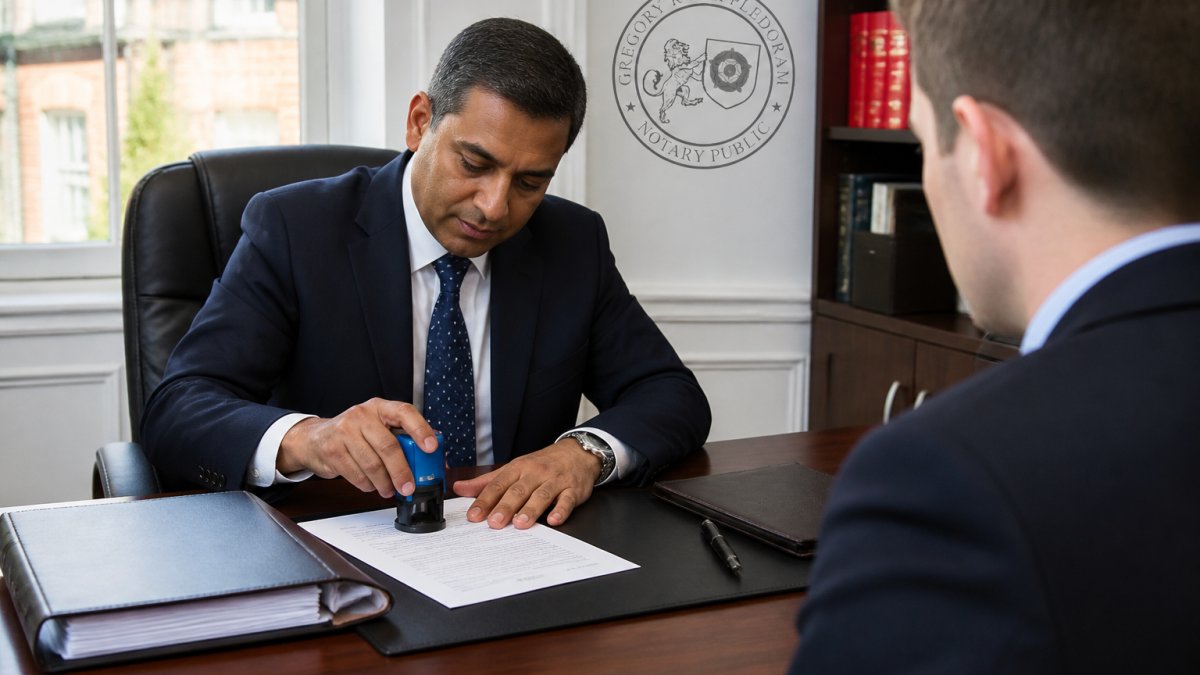
    A notary public applies an official seal to legalise documents at a desk in a London office while a client observes.
    A notary public applies an official seal to legalise documents at a desk in a London office while a client observes.

    Book an appointment and bring:

    • The original document, unsigned
    • Valid photo ID, such as a passport or driving licence
    • Proof of address
    • Any instructions from the receiving body in Singapore

    The notary will check your identity, watch you sign, and attach a notarial certificate with a signature and official seal.

    Gregory Mappledoram, Notary Public, has over 18 years of notarial experience and can handle time-pressured matters, including same-day service.

    Step 4: Check the Singapore Apostille Requirements

    The key requirement is straightforward: the document must be a UK public document, or a private document that has been properly notarised, before the FCDO will apostille it. An apostille is a certificate fixed to the document confirming the authenticity of the signature, seal or stamp on it.

    What the FCDO checks before issuing an apostille:

    • The notarial certificate is complete and correctly signed
    • Names and dates match
    • The signature or seal on the document is one the FCDO recognises

    The two directions, do not blur them:

    Search results often mix two distinct processes. Keep them separate:

    • UK-issued documents going to Singapore. The route is notarisation (where required) followed by an FCDO apostille. This is the process described in this article.
    • Foreign-issued documents being used in Singapore. These do not go to the FCDO. Instead, the document is legalised in the country of issue and then it can be used in Singapore.

    If your document was issued outside the UK and is destined for use in Singapore, confirm the inbound route with the receiving body before you start. Do not assume the UK apostille process applies.

    Electronic apostilles and verification:

    Some documents can be legalised electronically where the issuing body supports it. Some apostilles can be issued electronically, so check with the FCDO and the recipient which format applies.

    Contact Gregory →

    Watch OutA common failure is sending a private document to the FCDO without the required notarial certificate. It is returned rejected, and you lose the processing time. Check the route before you post.

    For current processing times and submission methods, check the FCDO guidance on getting documents legalised directly, as these change.

    Step 5: Arrange the Apostille for Documents Going to Singapore

    Once notarised, the document goes to the FCDO for the apostille. Gregory provides a holistic services where he can assist you in obtaining the apostille from the FCDO as part of the overall service.

    Practical points that catch people out:

    • Send the original, not a photocopy
    • Keep copies of everything before posting
    • Use tracked delivery both ways
    • Check whether the Singapore recipient wants a physical apostille or accepts a digital one

    Confirm with the recipient in Singapore whether an electronic apostille is acceptable for your matter.

    If you would rather have the notarisation and apostille handled together, you can arrange apostille and legalisation through our service rather than chasing each stage yourself.

    Step 6: Match Each Document Type to Its Legalisation Route

    Different documents take different routes, and getting this wrong wastes a trip. The table below is a working guide, but the decisive question is not the document type alone, it is what the receiving body in Singapore will accept. Use the decision sequence first, then the matrix.

    Decision sequence before you book anything:

    1. Confirm the receiving body accepts an apostille. Singapore is a party to the Hague Apostille Convention, so a UK apostille is normally sufficient for UK-issued documents. Ask the specific agency, court, bank or company to confirm in writing.
    2. Confirm whether the recipient wants the original, a certified copy, or a notarised copy. Some Singapore bodies insist on sight of the original; others accept a certified copy apostilled in place of the original.
    3. Confirm whether the document is public or private in UK terms. Public documents (for example, certificates issued by a UK registrar or a court) can often go straight to the FCDO for an apostille. Private documents (powers of attorney, contracts, company resolutions) generally need notarisation first.
    4. Confirm whether the Singapore recipient needs anything beyond the apostille. A minority of matters still require consular legalisation or a specific certification chain so check before you post.

    Document-by-document matrix:

    Document type

    Typical route

    What to watch

    Birth, marriage, death certificates (UK-issued)

    Apostille only

    Public documents; confirm whether the recipient accepts a certified copy rather than the original

    Company documents, board resolutions, certificates of incorporation

    Notarise, then apostille

    Common for corporate and banking matters; confirm whether the recipient wants the full set or extracts

    Powers of attorney

    Notarise, then apostille

    Signature must be witnessed by the notary; check whether the Singapore recipient requires a specific form of words

    Educational certificates and transcripts

    Notarise, then apostille

    Confirm whether the awarding body must certify first; some institutions issue their own certified copies

    Commercial contracts

    Notarise, then apostille

    Check whether the recipient wants the full contract or extracts; page numbering matters

    Identity documents (passport, driving licence)

    Certified copy, then apostille

    Originals are rarely sent abroad; confirm the copy is certified in the form the recipient expects

    Court documents (UK-issued)

    Apostille only, or notarise then apostille

    Depends on whether the court issues a certified copy; confirm with the issuing court

    Statutory declarations and affidavits

    Notarise, then apostille

    The notary administers the oath or affirmation; check the recipient’s format requirements

    Public versus private, the practical distinction:

    Public documents issued by UK authorities often need only the apostille. Private documents, such as powers of attorney or contracts, almost always need notarisation first. If you are unsure which category your document falls into, ask before you book. A short written confirmation from the receiving body in Singapore is worth more than any general guidance, because requirements vary by agency and by matter.

    Pro TipIf the receiving body in Singapore has a published document checklist, print it and take it to your notary appointment. Notaries see many destination requirements and can flag mismatches before the document is sealed.

    If you are unsure which category your document falls into, ask before you book.

    Step 7: Fix Rejected Applications Before You Resubmit

    Rejection is usually fixable, and it is rarely about the substance of the document. The common causes are procedural.

    The usual culprits:

    • The document was signed before the notary appointment
    • Pages were missing or out of order
    • The apostille was requested on an unnotarised private document
    • The Singapore recipient wanted a different document version

    When a document comes back, read the rejection notice carefully and note exactly what was flagged. Then correct that specific point rather than resubmitting the same paperwork.

    Our article on why international legal documents get rejected explains the recurring causes and how to fix them before you resubmit.

    Book a Notary for Your Singapore Document Set

    Getting a document ready for Singapore is a sequence, not a single step. Confirm the requirement, notarise correctly, then arrange the apostille, and most problems disappear before they start.

    If you are working to a deadline, whether a cross-border transaction, a property matter or a corporate filing, Gregory can help you. Gregory brings over 18 years of notarial practice and 25 years as a General Counsel, with same-day appointments available and documents prepared for the destination jurisdiction.

    Get in touch to contact Gregory and confirm what your Singapore document set needs.

    Frequently Asked Questions

    Can I legalise a document issued in the UK for use in Singapore?

    Yes. A UK-issued document intended for Singapore normally needs notarisation by a UK notary public, followed by an apostille from the Foreign, Commonwealth and Development Office. The order matters: the apostille confirms the notary’s signature and seal, so it must come after notarisation, not before. Check with the Singaporean receiving body first, because some public authorities and private organisations ask for additional steps or a certified translation.

    Do documents need an apostille for use in Singapore?

    Singapore is a party to the Hague Apostille Convention, so an apostille is normally the accepted form of authentication for foreign public documents. In practice this means a UK document legalised with an apostille should be accepted without consular legalisation. Confirm with the specific Singaporean authority or counterparty, since acceptance requirements can vary between government bodies and private institutions.

    How long does it take to legalise documents for Singapore?

    Timing depends on three things: how quickly the notary can see you, the FCDO’s apostille turnaround, and any courier time to Singapore. The apostille stage is the variable one, and turnaround depends on the service chosen. Build in extra days if your document needs a certified translation or if the receiving body has its own review queue.

    How do I get a document notarised before legalisation?

    Book an appointment with a notary public and bring the original document, valid photo identification, and evidence of your authority to sign if you are acting for a company. The notary verifies your identity, witnesses the signature and applies a notarial certificate and seal. Tell the notary the document is destined for Singapore so the certificate is prepared in a form the receiving authority will accept. Never sign in advance.


    The real risk with Singapore documents is not the notarisation itself, it is the sequence. One missed certificate or an unsigned original can send the whole set back. London Notary Services handles notarisation and can guide you through the apostille stage, with same-day appointments, documents prepared for the destination jurisdiction, and the backing of professional indemnity and fidelity cover. Get started with London Notary Services and send your documents to Singapore with confidence.

  • Apostille and Legalisation Process Explained

    Apostille and Legalisation Process Explained

    Last Updated: 28 October 2026

    Quick Summary

    The apostille and legalisation process depends on the destination country. An apostille is a single certificate authenticating a public document for Hague Apostille Convention countries, while legalisation is the longer consular route for countries outside that Convention. Both routes begin with notarisation by a qualified notary.

    • An apostille replaces the old chain of embassy certifications between Hague Convention member states.
    • Legalisation typically involves notary, apostille certification from the FCDO, then consulate authentication in sequence.
    • Apostille processing time depends on the authority’s workload, the document type and whether submission is standard or expedited.
    • Submitting a document before confirming the destination accepts an apostille is the most common cause of avoidable delay.
    • Gregory Mappledoram is a Notary Public with over 18 years of notarial experience and 25 years as a General Counsel.

    Table of Contents

    Apostille and Legalisation: What Each Route Does

    An apostille is a single certificate that authenticates a public officer’s signature and seal on a document for use in another country signed up to the Hague Apostille Convention (HCCH). Legalisation is the longer route used for countries outside that Convention, where a consulate or embassy adds its own certification after the apostille. This guide from Gregory Mappledoram, Notary Public explains the current apostille and legalisation process, from first notarial step to final filing. (Source: The Hague Convention on Private International Law)

    The distinction matters more than most people realise. Choose the wrong route and a perfectly valid document arrives at a foreign registry and is refused.

    Both routes begin the same way: a notary or other competent authority verifies the document before any certificate is attached. Where they diverge is what happens next, and how long it takes.

    Apostille vs Legalisation: How the Two Routes Differ

    The two routes differ in scope, not difficulty. An apostille is issued under the Hague Apostille Convention and replaces the old chain of embassy certifications between member states. Legalisation is for non-member destinations and typically involves consular authentication after the application of the apostille by the FCDO.

    Feature

    Apostille

    Legalisation

    Destinations

    Hague Convention countries

    Non-Convention countries

    Issuing body

    Foreign, Commonwealth & Development Office

    Consulate or embassy

    Typical stages

    Notary, then apostille

    Notary, apostille, then consulate

    Complexity

    Single certificate

    Multiple sequential steps

    Legalisation still applies where the destination has no Convention arrangement with the issuing state.

    How to Get a Document Apostilled Step by Step

    Obtaining an apostille means getting the underlying document notarised correctly first, then submitting it to the competent authority for the certificate.

    1. Confirm the destination country accepts an apostille.
    2. Identify which document type you hold: public, corporate or certified copy.
    3. Have the document notarised by a qualified notary.
    4. Submit the notarised document to the FCDO. The Notary can assist you with obtaining the apostille from the FCDO.
    5. Submit the apostilled document to the destination country.
    A notary public in a London office reviewing documents for the apostille and legalisation process
    A notary public in a London office reviewing documents for the apostille and legalisation process

    A common mistake is treating notarisation and apostille as one service. For a deeper walkthrough, see managing the apostille process for international filings. They are separate acts performed by separate bodies.

    Apostille Processing Time and What Affects It

    Apostille processing time depends on the FCDO’s workload, the document type and whether the submission is standard or expedited. The FCDO can issue an apostille the next business day and for urgent matters the same day provided the FCDO’s strict conditions for urgent processing are met.

    What affects timing:

    • FCDO queue. Submission channels and seasonal demand can both move the clock.
    • Errors. A missing signature or wrong certificate sends the file back to the start.

    Watch out: submitting a document before confirming the destination accepts an apostille is the single most common cause of avoidable delay. Check first, submit second.

    Legalising a Power of Attorney for Use Abroad

    A power of attorney intended for overseas use usually needs notarisation and then either an apostille or full legalisation, depending on the destination. See our guide to a notarised power of attorney for business. The document must be executed correctly before any certification is attempted.

    Contact Gregory →

    For corporate mandates, the signatory’s authority needs to be evidenced alongside the PoA itself. Consulates often request supporting company documents, and a mismatch between the PoA and the underlying resolution is a frequent rejection point.

    Common Reasons Documents Are Rejected

    Rejection almost always traces back to a defect in the document or the certificate, not bad luck. Read more on why international legal documents get rejected. The recurring causes are consistent.

    • Incorrect route chosen for the destination country
    • Missing or expired notarial certificate
    • Name or Signature that does not match the supporting ID
    • Document type the authority will not certify
    • Consulate-specific formatting the filing party overlooked

    Each of these is preventable with a check before submission.

    Contact Gregory to Prepare Your Documents for Filing

    Gregory Mappledoram is a Notary Public with over 18 years of notarial experience and 25 years as a General Counsel. Same-day service is available for time-pressured transactions, and documents are prepared to work in the destination jurisdiction.

    If a filing is looming, contact Gregory to prepare your documents and confirm the right route before anything is submitted.

    Frequently Asked Questions

    What is the difference between an apostille and legalisation?

    An apostille is a single certificate issued under the 1961 Hague Convention that confirms the origin of a public document’s signature, seal or stamp. Legalisation is the wider process used for countries outside that Convention, where the document passes through several stages, typically including consular legalisation at the destination country’s embassy or consulate. The apostille and legalisation process explained here follows the same first step, notarial certification, then splits depending on the destination.

    How do I get a UK document apostilled?

    The document must first be notarised by a practising notary public, who verifies the signatory’s identity and the document’s validity. The notarised document is then submitted to the Foreign, Commonwealth & Development Office (FCDO) for the apostille certificate to be attached. Check the FCDO’s current guidance for submission methods and turnaround before you file.

    How long does the apostille process take?

    Apostille processing time depends on the FCDO’s current workload and the submission method used, and it changes through the year, but typically the turnaround time is the next working day. Build in time for notarisation before submission and for any translation afterwards. Always confirm current turnaround on the FCDO’s official guidance rather than relying on an old estimate.

    Can a UK power of attorney be used abroad?

    A UK power of attorney is generally not accepted abroad on its own. For use in a Hague Convention country, it usually needs notarisation followed by an apostille. For non-Convention countries, legalising a power of attorney for use abroad typically requires notarisation, FCDO legalisation with the apostille and then consular legalisation by the destination embassy. Some jurisdictions also require a certified translation, so confirm the destination’s requirements first.

    Does an apostille prove that a document is genuine?

    No. An apostille confirms the authenticity of the signature, seal or stamp of the notary and does not authenticate the underlying document and the capacity of the person who signed it. It does not certify the truth of the document’s contents or that the transaction it records is valid. Foreign authorities may still reject a document for reasons unrelated to the apostille, such as missing translations, expired signatures or formatting that does not match local requirements.

    Do I need a translation before getting a document legalised?

    No, the translation follows after the legalisation process as the destination authorities require the translation of the whole bundle and for some destinations the translation needs to be a certified translation. Confirm the destination’s rule before commissioning a translation, because a translation completed in the wrong order may need to be redone.


    Getting a cross-border filing wrong is expensive, and the fix is usually a five-minute conversation before submission rather than a rework afterwards. Gregory handles notarisation, apostille and legalisation work with same-day appointments for urgent transactions, professional indemnity and fidelity cover, and documents prepared for the specific destination jurisdiction. Get started with London Notary Services and file with confidence.

  • What Do International Document Notarisation Costs Cover?

    What Do International Document Notarisation Costs Cover?

    Last Updated: October 27, 2026

    Quick Summary

    Notarisation costs are the total fees charged to certify a document for use abroad, combining the notary’s fee, any apostille or consular legalisation charges, translation costs and courier expenses. Each element responds to a different trigger, so the document type and destination country shape the bulk of the price.

    • The destination country’s rules often matter more than the document’s content when pricing notarisation.
    • A document must be notarised before it can be legalised by apostille or consular legalisation.
    • The FCDO fee does not cover the notary’s fee, translation, courier costs or consular legalisation.
    • Confirm the destination’s requirements before instructing anyone, as rejected documents cost more than fees saved.
    • Ask providers to break out notary, legalisation, translation and delivery fees separately in writing.

    Table of Contents

    What Drives Notarisation Costs for International Documents

    The costs of international document notarisation rarely come down to a single fee. They reflect the document itself, the destination country’s rules, and how quickly you need the work done. Understanding what sits behind that number is the first step to controlling it.

    Notarisation costs are the total fees charged to certify a document for use abroad. They combine the notary’s own fee, any apostille or consular legalisation charges. In addition to this there may be translation costs and courier expenses. Each element responds to a different trigger.

    Two factors shape the bulk of the price: what the document is, and where it is going.

    Document type and complexity

    Complexity shows up in several ways:

    • The number of signatories who must be verified
    • Whether the notary must witness a signature in person
    • How many pages need certification
    • Whether supporting evidence of identity or authority is required

    Destination jurisdiction requirements

    Where a document is heading often matters more than what it says. Some countries accept a simple notarial certificate. Others demand an apostille, or full consular legalisation. A few require certified translation into the local language before submitting.

    The destination drives the chain of steps. A document bound for a country that is part of the Hague Apostille Convention may need only an apostille (HCCH). One heading to a non-member state could need full consular legalisation.

    Confirm the destination’s requirements before instructing anyone. Our guide to legalisation requirements for foreign jurisdictions sets out what different countries ask for.

    The total cost of notarising a document for use abroad is made up of several separate elements.

    Cost element

    What it covers

    Notary’s fee

    Preparing and certifying the document

    Apostille or consular legalisation

    Official certification for the destination country

    Translation

    Rendering the document into the local language

    Courier expenses

    Delivery of documents

    The International Document Legalisation Process Explained

    The international document legalisation process is the sequence of steps that makes a notarised document acceptable to authorities in another country. It typically runs from notarisation, through an apostille or consular legalisation, certified translation where required, to delivery in the destination state.

    A London notary public reviewing corporate documents before confirming notarisation costs with a client.
    A London notary public reviewing corporate documents before confirming notarisation costs with a client.

    The order matters. A document must be notarised before it can be legalised. Our apostille and legalisation service explains the next step and how to book it.

    Here is how the process usually unfolds:

    Contact Gregory →

    Apostille Cost: What the FCDO Fee Covers

    What the FCDO fee does not cover:

    • The notary’s fee for preparing and certifying the document
    • Translation into another language
    • Courier or postage costs
    • Consular legalisation where an apostille is not enough

    Document Legalisation Fees Beyond the Apostille

    A simple way to think about it: the notary fee is one line, and legalisation, translation, and delivery are the others. Ask any provider to break these out separately so you can see what you are paying for. The notary is not responsible for issuing the apostille, this is the function of the FCDO, but the notary can assist with obtaining the apostille for clients.

    When an Urgent Notary Service Is Worth the Extra

    You can contact Gregory Mappledoram, Notary Public to discuss what is achievable for your deadline.

    How to Keep Notarisation Costs Down Without Cutting Corners

    Cutting costs is fine. Cutting corners is not, because a rejected document costs more than the fee you saved. The trick is to remove waste, not accuracy.

    A few practical moves help:

    • Confirm requirements first. Check what the destination actually needs before instructing anyone.
    • Speak to the Notary as soon as possible for timelines and any specific notarial requirements.
    • Work backwards from the deadline. Once you have the deadline and specific requirements work backwards on the timing to ensure everything can be completed on time.

    A common mistake is assuming every country needs the same treatment. They do not.

    Getting a Clear Quote for Your Documents

    You can review our fee guide at https://notary.uk.com/fees/ to see how fees are structured and request a quote before instructing.

    Ask questions, check the destination rules, and get the fee in writing.

    Frequently Asked Questions

    How much does it cost to notarise a document for use abroad?

    There is no single figure. Pricing depends on the documents and the work required. Contact Gregory for current pricing or a quote.

    Is an apostille included in a notary’s fee?

    Whether an apostille is included depends on the services arranged. Contact Gregory to confirm what is included in a quote. Gregory does not issue the apostille, the FCDO does, but Gregory can assist in obtaining the apostille for clients, as well as assisting in obtaining any consular legalisation.

    Can translation increase the cost of preparing a document for overseas use?

    Translation may affect the overall cost. Check the destination authority’s requirements. The translation service is the last step in the process.

    Can a notary charge extra for urgent or same-day service?

    Pricing for urgent work is not specified here. Contact Gregory to ask about current pricing and what may be achievable for your deadline.


    Getting a document rejected abroad is a costly headache. Gregory Mappledoram brings over 18 years of notarial experience and 25 years as a General Counsel to every instruction, with same-day appointments available for time-pressured matters. Documents are prepared to work in the destination jurisdiction, and you are protected through professional indemnity and fidelity cover. Get started with Gregory and secure a fixed fee before your work begins.

  • 5 Steps to Notarise International Corporate Documents

    5 Steps to Notarise International Corporate Documents

    Last Updated: October 25, 2026

    Quick Summary

    To notarise international corporate documents, confirm the signatory’s authority, prepare the complete original document, and attend the notary in person with photo ID and authority evidence. The notary then applies the certificate and seal, after which the notary can arrange an apostille or consular legalisation for the destination country.

    • Gather the original document, photo ID, proof of role and a current company register extract before booking.
    • A notary cannot notarise an incomplete document, so complete every field before your appointment.
    • Attendance in person is required because the notary must witness the signature directly.
    • The FCDO issues apostilles under the Hague Apostille Convention; the notary does not issue them but can facilitate obtaining the apostille.
    • Notarise first, then apostille or consular legalisation, never the reverse.

    Table of Contents

    What You’ll Need Before Notarisation

    Knowing how to notarise international corporate documents starts with preparation, not paperwork, and the same applies when you notarise international corporate documents for a cross-border transaction. The notary must verify who is signing, confirm the company‘s authority, and check that the document is complete before any stamp goes on the page. We see more delays caused by missing authority evidence than by anything else.

    Gather these before you book:

    • The original document, fully drafted with no blanks left to fill
    • Photo ID for every signatory, such as a current passport or driving licence
    • Proof of the signatory’s role, like a director’s appointment letter or board minute
    • Company constitutional documents, including the articles of association
    • A current company register extract confirming officers and shareholders
    • Written confirmation that the document will be used abroad, and where

    A common mistake is arriving with a draft that still has gaps. A notary cannot notarise an incomplete document, so the appointment is wasted.

    If you want to see the full corporate service and arrange an appointment, our corporate and commercial notarisation page sets out what we handle.

    Documents Required for Corporate Notarisation

    The documents required for corporate notarisation fall into three groups: the document itself, proof of identity, and proof of authority. Most rejections trace back to the third group.

    Powers of attorneys need the signed original plus evidence the signatory holds the delegated authority. Board resolutions need the resolution and the meeting record behind it. Company registers need a current extract, not a version from last year.

    Foreign authorities often ask for more than the document alone. Some want certified copies of the register. Others want confirmation that the signatory’s authority is still current on the day of signing.

    Watch out: a register that has not been updated after a director change will contradict the resolution. The receiving authority will spot the mismatch and reject the pack.

    Step 1: Confirm Signing Authority and Prepare the Documents

    Authority is the foundation of the whole process. If the person signing cannot bind the company, the notarised document is worthless abroad.

    Follow this sequence:

    1. Check the articles of association for signing rules
    2. Confirm the signatory is a current director or properly authorised officer
    3. Pull a board minute that grants authority for this specific transaction
    4. Draft the document with every field completed
    5. Match names exactly across ID, register and document

    Names cause more trouble than anything else. A middle name missing from a register extract can stall an overseas filing for weeks.

    If the transaction is time-pressured, such as a cross-border closing, say so when you book. We offer same-day service for urgent corporate work, backed by more than 18 years of notarial practice.

    Step 2: Notarising Board Resolutions and Company Registers

    Notarising board resolutions means certifying that the resolution was properly adopted and that the signatures are genuine. The notary is not judging the commercial decision, only the execution.

    For company registers, the notary certifies the extract as a true copy of the register held by the company. Bring the current version.

    Two practical points matter here:

    • Resolutions should name the transaction rather than referring vaguely to “the matter discussed”
    • Register extracts should be dated close to the appointment

    For detailed guidance on this stage, read our article on notarising board resolutions for foreign use.

    Contact Gregory →

    Step 3: Book the Notary Appointment and Attend in Person

    Attendance is not optional. A notary must see the signatory sign, verify identity in person, and witness the execution directly. Electronic notarisation may be available for some documents, depending on the destination’s requirements. Please check with me when booking. 

    Bring the originals, your ID, and the authority evidence. The appointment usually involves:

    • Identity checks against photo ID
    • A short conversation about the document’s purpose and destination
    • Witnessing the signature
    • Applying the notarial certificate and seal

    The notarial certificate wording depends on where the document is going. A certificate drafted for one jurisdiction may not satisfy another, which is why we ask about the destination at booking. Our guide on visiting a notary explains what to bring and how the appointment runs.

    A notary public and client sign and notarise international corporate documents in a bright office.
    A notary public and client sign and notarise international corporate documents in a bright office.

    Step 4: Arrange the Corporate Document Apostille

    The corporate document apostille is the step that makes a notarised document usable in another country. In the UK, the Foreign, Commonwealth & Development Office issues apostilles under the Hague Apostille Convention, which replaces consular legalisation between member states.

    The notary prepares the document; the apostille is a separate government step. Many clients assume the notary handles it end to end, and Gregory does assist in obtaining the apostille for his clients, but the apostille itself is issued by the FCDO. Check processing times directly with the Foreign, Commonwealth & Development Office before you promise a closing date to a counterparty.

    Our walkthrough of the apostille process for corporate documents covers what to expect at each stage.

    Step 5: Complete Company Documents Legalisation Where Required

    Company documents legalisation is needed when the destination country is not part of the Hague Apostille Convention. In that case, an apostille is not enough and the document must also go through the relevant embassy or consulate after notarisation and obtaining the apostille.

    The order matters: notarise first, then apostille or consular legalisation, never the reverse. Getting the sequence wrong means starting again.

    Requirements vary widely by country, and they change. Some consulates ask for additional certified copies. Others require translations prepared in a specific way. Confirm the current rules with the relevant embassy or consulate before submitting, and check our page on legalisation requirements for foreign jurisdictions for the destination-specific position.

    Also check on translation requirements. If required, translate last. If the destination needs a certified translation, order it only once notarisation, apostille and any consular legalisation are complete, so the translator works from the final document. Confirm in advance whether the translation itself must be authenticated.

    Common Mistakes to Avoid When Notarising International Corporate Documents

    Most failures are avoidable. Here is what we see most often:

    Mistake

    Why it fails

    The fix

    Incomplete document at appointment

    Notary cannot certify a draft

    Complete every field first

    Name mismatch across ID and register

    Authority cannot be verified

    Reconcile names before booking

    Outdated register extract

    Contradicts the resolution

    Pull a current extract

    Wrong certificate wording

    Rejected by receiving authority

    State the destination country

    Legalisation done in wrong order

    Document must be redone

    Notarise, then apostille

    One more: sending photocopies instead of originals. Foreign authorities routinely reject copies that were not certified as true copies at the right stage.

    The good news is that a properly prepared pack clears first time. Precision at the start saves the cost and delay of a second round.


    Cross-border deadlines do not wait, and a rejected document can put a transaction at risk. Gregory handles corporate notarisation with same-day service for urgent matters, drawing on more than 18 years of notarial practice and 25 years as a General Counsel. Documents are prepared to work in the destination jurisdiction, with protection through professional indemnity and fidelity cover. Get started with Gregory Mappledoram, Notary Public and send your corporate documents abroad with confidence.

    Frequently Asked Questions

    How do you notarise corporate documents for use overseas?

    The process starts with confirming who has authority to sign, then gathering the documents required for corporate notarisation, such as board resolutions, certificates of incorporation and powers of attorney. A notary public verifies the signatory’s identity and authority, witnesses the signature and applies a notarial certificate. If the destination country is a Hague Apostille Convention member, the document then needs a corporate document apostille from the Foreign, Commonwealth & Development Office. Non-member countries require further company documents legalisation through their embassy or consulate.

    Does an international corporate document need an apostille?

    It depends on the destination country. If the document is going to a country that is party to the Hague Apostille Convention, an apostille is normally required to confirm the notary’s signature and seal. If the destination is not a member, the document will usually need legalisation by the relevant embassy or consulate instead. Always check the specific requirements of the authority receiving the document, as some will also ask for certified translations or additional corporate evidence.

    Who can sign corporate documents before a notary?

    The signatory must be someone the company’s constitution and board resolutions authorise to bind the company, typically a director or a duly appointed attorney. The notary will ask for evidence of that authority, such as a board resolution, the company’s articles of association and a current certificate of incorporation. If the signatory is acting under a power of attorney, the notary will also need to see that document. A notary can verify a director’s authority to sign by reviewing these records before certifying the execution.

    How long does it take to notarise and legalise corporate documents?

    Notarisation itself is often completed at a single appointment, and same-day service is available for time-pressured transactions. The apostille stage is handled by the Foreign, Commonwealth & Development Office and typically adds several working days, while embassy legalisation can take longer depending on the country. Build extra time into your schedule for translations or courier delivery. For cross-border closings, confirm the receiving authority’s requirements early so the notary, apostille and legalisation steps run in the right order.

  • How to Avoid Document Rejection Abroad

    How to Avoid Document Rejection Abroad

    Last Updated: 23 October 2026

    Quick Summary

    To avoid document rejection abroad, confirm the receiving authority’s requirements in writing before you spend anything on notarisation and legalisation, then match their rules on apostille versus consular legalisation, certified translation and document age. Most document rejection cases stem from paperwork faults, not the document’s content, so check the original and requirements before submitting.

    • Ask the receiving body in writing whether they need an apostille or full consular legalisation.
    • Tell your notary the destination country so the notarial wording is correct first time.
    • Order certified translations only after the original document has been notarised and legalised.
    • If rejected, request the reason in writing and fix that specific issue before resubmitting.
    • Keep scanned copies of everything and send originals by tracked delivery.

    Table of Contents

    Why Documents Get Rejected Abroad (and How to Prevent It)

    Document rejection abroad is the refusal of a document by a foreign authority because it fails that country’s legalisation, translation or certification rules, and most document rejection cases are avoidable. Gregory Mappledoram, Notary Public sees the same avoidable faults again and again. Most rejections are not about the content of the document. They are about the paperwork wrapped around it. (Source: Hague Conference on Private International Law guidance on the Apostille Convention)

    Here is the uncomfortable truth: a document that is perfectly valid in one country can be worthless in another. Formatting, seals, signatures and language all need to match what the receiving authority expects.

    Below, we explain exactly where things go wrong and how to fix each problem before you submit.

    Apostille Document Requirements: The Essential Checklist

    An apostille is a certificate that confirms the authenticity of a signature, seal or stamp on a public document. It is issued under the Hague Apostille Convention, which lets member countries accept each other’s documents without further embassy legalisation (HCCH).

    The Hague Conference on Private International Law guidance on the Apostille Convention sets out the core rules. Not every country is a member, though. Some destinations still need full consular legalisation.

    Documents That Typically Need an Apostille

    • Birth, marriage and death certificates
    • Powers of attorney
    • Company board resolutions and registers
    • Academic certificates and transcripts
    • Court orders and sworn statements
    • Notarised copies of passports or company documents

    How to Confirm the Receiving Authority’s Requirements

    Ask the receiving body in writing before you spend a penny on notarisation and legalisation. Confirm three things: whether they want an apostille or full consular legalisation, whether they need a certified translation, and how recent the document must be. A short email now saves weeks later.

    Pro TipKeep that written confirmation on file. If a document is later questioned, a dated email from the receiving authority is powerful evidence that you followed their instructions.

    Common Apostille Mistakes That Lead to Rejection

    The most common apostille mistakes are predictable, see the table below for some examples and hot to prevent these.

    Mistake

    Why It Causes Rejection

    How to Prevent It

    Certifying a copy instead of the original

    Some authorities only accept originals

    Ask the receiving body which they need

    Wrong notarial wording

    Foreign officials expect specific language

    Tell your notary the destination country at the start of the instruction

    Missing or damaged seal

    Apostille cannot be verified

    Keep documents flat and dry

    Out-of-date document

    Some authorities set age limits

    Check validity rules before submitting

    Apostille from the wrong authority

    Certificate is not recognised

    In the UK only the Foreign, Commonwealth & Development Office can issue an apostille

    A notary who understands the destination jurisdiction will phrase the certificate correctly the first time. That single step prevents most of the problems above.

    Certified Translation for Overseas Documents: Getting It Right

    Certified translation for overseas documents means a translation prepared and signed by a qualified translator, confirming it is a true and accurate rendering of the original. Many authorities reject translations that are accurate but not properly certified.

    Watch for these faults:

    • The translator’s statement is missing or unsigned
    • The translator’s credentials are not stated
    • The translation is not bound to a copy of the original
    • Names and dates do not match the source document exactly

    Order the translation only after the original has been finalised. If the notarial certificate changes, the translation must change too. Rebuilding a translation costs time you may not have.

    Contact Gregory →

    What to Do If an Apostilled Document Is Rejected

    If an apostilled document is rejected, do not resubmit it unchanged. Ask the receiving authority for the rejection reason in writing. The fault is usually one of four things: wrong legalisation type, poor translation, incorrect wording, or a document that is too old.

    Once you know the reason, fix that specific issue and resubmit. If the authority will not explain, ask a notary to review the document against the destination country’s known requirements. A second opinion often spots the fault in minutes.

    Step-by-Step: Preparing Documents for Submission

    A notary stamping legal documents at a desk to avoid document rejection
    A notary stamping legal documents at a desk to avoid document rejection

    Follow this sequence to cut your risk of rejection.

    1. Confirm the requirement. Get the receiving authority’s rules in writing.
    2. Check the original. Make sure names, dates and content are correct and consistent.
    3. Book the notary. Tell them the destination country and how the document will be used. Sign the document in the presence of the Notary not before the appointment.
    4. Legalise. Arrange the apostille or consular legalisation through the correct authority. The Notary will deal with this for you in most cases.
    5. Translate if needed. Use a certified translator and check the certificate is signed.
    6. Copy and archive. Keep scanned copies of everything you submit.
    7. Send by tracked delivery. Keep proof of posting and receipt.

    Total time: plan for several working days at minimum. Urgent cross-border closings need same-day notarisation to protect the timeline. Our team handles time-pressured files regularly, drawing on more than 18 years of notarial practice.

    Watch OutNever post original documents without tracking and a copy on file. If an original is lost in transit, replacing it can take weeks and may delay a transaction.

    When to Use a Notary Public for Cross-Border Documents

    Use a notary public when a foreign authority needs proof that a signature is genuine, a document is authentic, or a copy matches the original. Notaries are officers of the law, and their acts carry weight with overseas bodies.

    You will usually need one for powers of attorney, company resolutions, property transactions and immigration paperwork. A notary can also confirm that the wording suits the destination country, which is where most rejections begin.

    Gregory ensures that every file is prepared with the destination jurisdiction in mind. Documents are checked against local requirements before they leave the office, and cover is backed by professional indemnity and fidelity insurance.

    Frequently Asked Questions

    Why might a document be rejected abroad?

    A document can be rejected abroad for several reasons: missing or incorrect apostille, outdated signatures, name mismatches between documents, lack of a certified translation, or failure to meet the receiving authority’s specific format requirements. Even minor discrepancies, such as a middle name missing on one document but present on another, can trigger rejection. Always verify the destination country’s exact requirements and ensure all details match across every page before submission.

    Does an apostille guarantee that a document will be accepted abroad?

    No. An apostille confirms the authenticity of the signature and seal on a public document, but it does not guarantee acceptance by the receiving authority. The destination country may have additional requirements, such as certified translations, specific forms, or legalisation steps beyond the apostille. Always check with the receiving authority or a local legal professional to confirm what is needed for your specific document and jurisdiction.

    What should I do if my apostilled document is rejected abroad?

    If an apostilled document is rejected, first obtain the exact reason in writing from the receiving authority. Then review the document for errors such as incorrect names, missing pages, or translation issues. You may need to have the document re-notarised, re-apostilled, or translated by a certified translator. In complex cases, seek advice from a notary public experienced in cross-border documentation to ensure the corrected version meets all requirements before resubmission.

    Do I need to have a document translated before legalisation?

    Invariably, no. Most authorities require a certified translation to be submitted of the original notarised and legalised document. Always confirm the requirements with the receiving authority, but if in doubt do the certified translation at the end. Use a certified translator for overseas documents and check whether the translator must be approved by the destination country’s embassy or consulate.


    Rejection letters cost more than time. They stall transactions, unsettle clients and delay closings you cannot move. The fix is preparation: confirm the rules, get the wording right, and have every document checked before it travels. London Notary Services offers same-day service, more than 18 years of notarial experience and a practical understanding of commercial context. Contact Gregory to get your documents prepared correctly the first time.

  • Certifying Company Resolutions for Foreign Jurisdictions

    Certifying Company Resolutions for Foreign Jurisdictions

    Last Updated: October 22, 2026

    Quick Summary

    Certifying company resolutions for foreign jurisdictions confirms a resolution’s authenticity so an overseas registry, bank or court will accept it. A notary verifies the signatories and applies their seal, then an apostille or consular legalisation is added depending on the destination.

    • An apostille is required for Hague Convention countries; non-Convention countries usually also need consular legalisation.
    • A certified copy must be legible, complete and identical to the original, including all signatures and annexes.
    • Include the company’s full legal name, registration number, meeting details and the resolution text in full.
    • The most common rejection cause is a broken authentication chain, such as a notarised document with no apostille.
    • Confirm the destination’s exact requirements before anything is signed or sealed to avoid rejection.

    Table of Contents

    Why Certifying Company Resolutions for Foreign Jurisdictions Matters

    A company resolution that works perfectly in a boardroom here can stall a transaction abroad if it is not properly authenticated. Certifying company resolutions for foreign jurisdictions is the process of confirming the document’s authenticity so an overseas registry, bank or court will accept it. Gregory Mappledoram Notary Public handles this for in-house teams who cannot afford a rejected filing.

    The stakes are practical, not theoretical. A missing apostille or a signature that does not match the filed record can hold up a cross-border acquisition, delay a bank mandate or block a property transfer. Foreign authorities do not accept a resolution on trust, they want a chain of authentication they recognise.

    Below, we explain exactly what each stage involves, what to include in the resolution itself, and the reasons documents get rejected.

    Notarising a Board Resolution for International Use

    Notarising a board resolution for international use means a notary public verifies the signatures and the authority of the people who signed it, then applies their official seal and signature. This step turns a private company document into one a foreign authority can begin to trust.

    The notary does not certify that the decision is commercially sound. The role is to confirm identity and execution.

    What the Notary Checks Before Certifying

    Before certifying company resolutions, the notary will typically confirm:

    • The identity of each signatory, usually by passport or driving licence
    • That the signatory holds the office the resolution states
    • That the signatures were applied in the notary’s presence
    • That the document is complete and internally consistent
    • That the company exists and the extract or register supports the authority claimed

    A common mistake is arriving with a resolution signed days earlier and no signatory present. Some destinations accept that with a certified copy and supporting evidence, others do not. Confirm the requirement before the appointment.

    Pro TipBring the company’s register of directors and any board minutes authorising the signatory. A notary who can see the authority chain on the day is far less likely to have to pause the certification.

    Apostille for Company Resolutions: When It Is Required

    An apostille for company resolutions is a certificate that confirms the notary’s signature and seal, issued under the Hague Apostille Convention. It is required when the destination country is a party to that convention. For countries outside it, legalisation through the relevant embassy or consulate is usually also needed.

    The apostille is applied to the notarised document, not to the original resolution alone. Get the order wrong and the chain breaks.

    Destination type

    What is usually needed

    Where it is handled

    Hague Convention country

    Notary certification, then apostille

    The Foreign, Commonwealth & Development Office

    Non-Convention country

    Notary certification, apostille, then consular legalisation

    The destination embassy or consulate

    Destination requires translation

    Certified translation of the authenticated document

    A sworn or accredited translator

    The Hague Conference on Private International Law guidance on the Apostille Convention sets out which states are party to the convention. Check the current status before assuming an apostille will be accepted.

    Certified Copy of a Company Resolution: What Counts as Valid

    A certified copy of a company resolution is a duplicate that a notary or other authorised person has marked as a true copy of the original they inspected. It is not simply a photocopy with a company stamp.

    What makes it valid depends on the destination. Some authorities accept a notary-certified copy, others want the copy certified and then apostilled, and a few insist on seeing the original as well. The copy must be legible, complete and identical to the document examined, including all signatures and annexes.

    Where the original cannot travel, a certified copy is often the practical route. Ask the receiving authority what it will accept before you commit to a format. (Source: Companies Act 2006)

    Company Resolution Template for Overseas Use: What to Include

    A company resolution template for overseas use should contain enough detail that a foreign reader needs no further explanation. The weakest resolutions we see are the ones written for domestic purposes and reused abroad.

    Include the following:

    Contact Gregory →

    • Full legal name of the company, registration number and registered office
    • Date and place of the board or member meeting
    • Names and offices of those present and voting
    • The precise resolution text, stated in full
    • Confirmation of the signatory’s authority to sign
    • Signature blocks with names, titles and dates
    • Any annexes, such as the register extract or powers of attorney
    Watch OutA resolution that refers to “the attached authority” without actually attaching it will usually be rejected. Foreign registries cannot verify what they cannot see.

    Keep the language plain and avoid internal shorthand. A reader in another jurisdiction has no context for your internal references.

    Step-by-Step: Certifying Company Resolutions for Foreign Jurisdictions

    Certifying company resolutions for foreign jurisdictions follows a predictable sequence. Get the order right and the process is straightforward; get it wrong and you repeat steps at cost.

    A notary public reviewing documents for certifying company resolutions in a professional office.
    A notary public reviewing documents for certifying company resolutions in a professional office.
    1. Confirm the destination’s requirements. Ask the receiving authority or your local counsel what format, translation and authentication they need.
    2. Draft or check the resolution. Make sure it is complete and self-explanatory for a foreign reader.
    3. Gather supporting evidence. Company register extract, identification for signatories and proof of authority.
    4. Attend the notary. Signatories sign or confirm signatures in the notary’s presence as required.
    5. Notarial certification. The notary applies their seal and signature.
    6. Apostille or legalisation. Send the notarised document for the apostille or if consular legalisation is required, the apostille first and then the consular legalisation.
    7. Translation, if needed. Arrange certified translation and check whether it must also be authenticated.
    8. File with the destination authority. Keep authenticated copies for your own records.

    The Foreign, Commonwealth & Development Office guidance on legalisation and apostilles explains the current process for getting documents legalised.

    Common Reasons Foreign Authorities Reject Resolutions

    Rejection usually comes down to a handful of avoidable faults. The most frequent is a broken authentication chain: a notarised document with no apostille, or an apostille attached to the wrong page.

    Other recurring problems:

    • Signatures that do not match the register of directors
    • A resolution that omits the signatory’s authority
    • Missing annexes referenced in the text
    • Translation that is not certified or not attached correctly
    • A document that has been altered after certification
    Key TakeawayThe single most reliable way to avoid rejection is to confirm the destination’s exact requirements before anything is signed or sealed. Everything else follows from that.

    We see the same pattern repeatedly: teams treat certification as a formality and only discover a gap when the filing is refused. The fix is front-loaded diligence, not a faster stamp.

    Conclusion

    Cross-border filings punish assumptions. A resolution that satisfies a domestic board can still fail a foreign registry if the authentication chain, translation or supporting evidence is incomplete.

    Gregory prepares documents to work in the destination jurisdiction, drawing on more than 18 years of notarial practice and 25 years as a General Counsel. We offer same-day service for time-pressured transactions, with the commercial context that in-house teams and referring solicitors need, backed by professional indemnity and fidelity cover.

    Contact Gregory to get your resolutions certified correctly the first time.

    Frequently Asked Questions

    How do you certify a company resolution for use abroad?

    The resolution is signed by the authorised directors or officers, then a notary public verifies the signatories’ identities and authority before applying a notarial certificate. If the destination country is a party to the Hague Apostille Convention, the notarised document then goes to the Foreign, Commonwealth & Development Office for an apostille. For non-Convention countries, consular legalisation follows. The exact sequence depends on the receiving authority’s requirements, so confirm them before signing.

    Does a company resolution need to be notarised for a foreign jurisdiction?

    Most foreign registries, banks and land authorities require notarisation because they cannot verify UK signatories themselves. A notary public confirms identity, capacity and authority, giving the receiving body confidence the resolution was properly executed. Some jurisdictions accept a certified copy from a solicitor or company secretary instead, but notarisation is the safer default for cross-border filings. Check the destination authority’s specific rules first.

    When does a company resolution need an apostille?

    An apostille is needed when the destination country is a party to the Hague Apostille Convention and its authorities require legalisation of the notarised document. The apostille is issued by the Foreign, Commonwealth & Development Office and confirms the notary’s signature and seal. If the country is not a Convention member, consular legalisation at its embassy or consulate is usually also required. Confirm the receiving authority’s requirement before arranging either.

    What is the difference between notarising and legalising a company resolution?

    Notarising is the first step: a notary public verifies the signatory’s identity and authority and attaches a notarial certificate. Legalising is the second step: an apostille or consular stamp confirms the notary’s signature and seal to the foreign authority. A notarised resolution without legalisation may still be rejected abroad. The two steps serve different purposes and are usually both required for cross-border use.

    Who can certify a board resolution for international use?

    A notary public is the usual choice for international use because their signature can be legalised by apostille or consular legalisation. Solicitors and company secretaries can certify copies in some contexts, but foreign authorities often insist on notarisation. The notary will check the signatory’s identity, the company’s constitutional documents and the board’s authority to pass the resolution. Using a notary experienced in cross-border corporate work reduces the risk of rejection.

    What documents should accompany a company resolution for overseas filing?

    Typically the signed resolution, the company’s certificate of incorporation, the current articles of association, and evidence of the signatory’s authority such as a board minutes extract or powers of attorney. Some authorities also ask for a certificate of good standing or a register of directors. Provide clean copies and confirm the destination’s document list in advance, because missing supporting documents are a common cause of rejection.

    Can a certified copy of a company resolution be used abroad?

    A certified copy can be used abroad when the receiving authority accepts a copy rather than the original. The copy must be certified by a notary, and the certification itself may need an apostille or consular legalisation. Some registries insist on seeing the original signed resolution, so confirm the requirement before relying on a certified copy. The notary can advise on the correct format for the destination.

  • How to Prepare Documents for Foreign Courts

    How to Prepare Documents for Foreign Courts

    Table of Contents

    Last Updated: 20 October 2026

    Start With the Receiving Court’s Requirements

    The single most common reason documents are rejected abroad is that they were prepared to the wrong specification. Every jurisdiction sets its own rules on format, signatures, seals, and language, and those rules govern whether your paperwork is accepted. We see the consequences of this regularly, a correctly notarised document refused because it was never legalised, or a translation rejected because the translator was not approved in the receiving country.

    So the first step in how to prepare documents for foreign courts is not to reach for a stamp. It is to ask the receiving court, or the local lawyer instructing you, exactly what it expects. Confirm three requirements before anything else:

    • Whether the document must be notarised, apostilled, or consular legalised
    • Whether a certified translation is required and by whom
    • Whether the court requires anything beyond the standard chain

    Get those answers in writing. A short email from the instructing solicitor or foreign counsel is worth more than any general guide, including this one.

    Notarisation and Legalisation for Foreign Courts

    Notarisation is the process by which a notary public verifies your identity, witnesses your signature, and certifies that the document is genuine. It is the foundation of the chain, but on its own it rarely satisfies a foreign court.

    Legalisation is the separate step that tells the receiving country the notary’s signature is authentic. Depending on the destination, this means either an apostille or full consular legalisation through the relevant embassy. The two are not interchangeable, and using the wrong one wastes days you may not have.

    A notary public applying a seal to legal documents for foreign courts on a polished desk.
    A notary public applying a seal to legal documents for foreign courts on a polished desk.

    A common mistake is booking the notary before checking which route applies. If the destination is outside the apostille convention, you will need consular legalisation, and that often means the document must be notarised in a specific way first. We would always confirm the route before the appointment, not after.

    Watch OutTurning up with a signed document and expecting a notary to simply stamp it is the fastest way to lose a day. A notary must witness the signature, so never sign in advance.

    Apostille for Foreign Court Documents

    An apostille is a certificate that authenticates the origin of a public document so it can be used in another country that is party to the Hague Apostille Convention. In practice, it replaces lengthy consular legalisation with a single stamped certificate.

    For court documents, the apostille is usually issued by the competent authority in the country where the document was notarised. The notary’s job is to ensure the underlying document is in the correct form; the apostille then confirms the notary’s signature and seal are genuine.

    Two practical points matter here. First, the apostille attaches to the notarial certificate, not to your original document or resolution, so the notarial wording must be right. Second, some courts insist the apostille be issued within a certain period before filing. Check the destination’s requirements rather than assuming last year’s certificate will still be accepted.

    Certified Translation for Court Documents

    Court filings abroad are typically conducted in the local language, and documents may need translation into the trial country’s official language, sometimes with an apostille or consular legalisation attached. The guidance on preparing documents for submission to foreign courts notes this is common but not a universal rule, so confirm the exact requirement with the receiving court.

    A certified translation is a translation accompanied by a signed statement from the translator or translation company confirming it is a complete and accurate rendering of the original. Some jurisdictions require the translator to be sworn or officially appointed; others accept a certified translation from a reputable agency.

    Sequence matters. In most cases the translation should follow notarisation, so the translator is working from the final, sealed document. If you translate first and the notary then amends the wording, you will pay twice.

    Pro TipAsk the receiving court whether it requires a sworn translator or accepts a certified translation. The difference changes who you can instruct, and getting it wrong is one of the most frequent causes of rejected filings.

    Notarised Power of Attorney for Property

    A notarised power of attorney for property is a legal instrument, signed before a notary, that authorises someone to act on your behalf in relation to property, often in another country. It is one of the documents most often requested by foreign courts and land registries, and one of the most frequently rejected when it is prepared carelessly.

    The wording must match what the destination jurisdiction permits. Some countries require the power to be executed in a specific format, in a specific language, or with express reference to the powers granted. A generic power drafted for domestic use will often fail abroad. Remember that a power of attorney being signed in England and Wales must also satisfy the deed requirements under the Powers of Attorney Act 1971 in order to be a valid instrument when executed in England or Wales.

    We recommend three checks before signing:

    Contact Gregory →

    • Confirm the exact powers the foreign court or registry will accept
    • Confirm whether the document must be apostilled or consular legalised
    • Confirm whether a certified translation is needed alongside it

    Because a power of attorney can be used to deal with valuable property, the notary will verify your identity and your understanding of what you are signing. Expect that scrutiny; it protects you.

    Serving legal documents abroad is the formal process of delivering court papers to a party in another country in a way that the receiving court recognises as valid. It is governed by international conventions and local rules, and getting it wrong can invalidate proceedings.

    A good rule of thumb is that requests to a foreign court should be drafted in clear, simple, non-technical language and should avoid unnecessary information that could confuse the receiving court. Precision beats volume.

    In practice, service abroad often requires a formal request through the appropriate channel, translated into the receiving country’s language, and supported by notarised documents where local rules demand it. We would treat service as a project with a timeline, not a single errand, because the back-and-forth between courts can take weeks.

    Step

    What it involves

    Typical timing

    Confirm the route

    Check convention or local rules apply

    Before drafting

    Prepare the request

    Clear, plain-language drafting

    1-2 days

    Notarise and legalise

    Notary, then apostille or consulate

    Days to weeks

    Translate

    Certified or sworn translation

    2-5 days

    Submit and track

    File with the receiving authority

    Weeks

    Common Reasons Foreign Courts Reject Documents

    Rejection almost always traces back to a preventable error, and the pattern is consistent. The analysis of proof of foreign law and expert evidence in English courts considers how the role of expert evidence has shifted following FS Nile Plaza v Brownlie [2021], a reminder that even domestic courts are tightening their expectations around foreign-law material.

    The recurring failures we see are:

    • Missing or incorrect legalisation for the destination
    • Signatures witnessed without the notary present
    • Translations from unapproved or unsworn translators
    • Outdated apostilles or certificates past their validity
    • Powers of attorney that grant narrower powers than the transaction requires
    • Names or dates that do not match the underlying documents exactly

    Most of these are caught at the point of preparation, not at the border. A short checklist and a conversation with the receiving court prevent nearly all of them.

    Key TakeawayThe document that succeeds abroad is the one prepared to the receiving court’s specification from the outset. Confirm the route, notarise correctly, legalise appropriately, and translate last.

    Cross-border filings rarely fail because the law is difficult. They fail because the paperwork was assembled in the wrong order, to the wrong standard, or without confirming what the receiving court actually wanted. If you are facing a deadline on a transaction or a filing, Gregory can help you get the sequence right from the start. Gregory Mappledoram brings over 18 years of notarial practice and 25 years as a General Counsel, with same-day service for time-pressured matters and documents prepared to work in the destination jurisdiction, backed by professional indemnity and fidelity cover. Contact Gregory to confirm what your destination requires and book your appointment.

    Frequently Asked Questions

    How do I prepare UK documents for use in a foreign court?

    Start by asking the receiving court or the local lawyer handling the matter what it requires. Then arrange notarisation by a UK notary public, add an apostille from the Foreign, Commonwealth & Development Office if the destination is in the Hague Apostille Convention, or consular legalisation if it is not. Arrange certified translation for court documents into the court’s official language if needed. Keep certified copies and a clear audit trail of every step.

    Do documents for a foreign court need to be notarised?

    Not always, but many foreign courts and registries expect notarisation for signatures, certified copies and sworn statements. The requirement depends on the destination jurisdiction and the type of document. Check the receiving court’s practice directions or ask a local lawyer. A UK notary public can verify identity, witness signatures and certify copies so the document is in a form the destination court is more likely to accept.

    When does a foreign court require an apostille?

    An apostille is usually required when the destination country is a member of the Hague Apostille Convention and its court or registry asks for legalisation of a UK public document. The apostille is issued by the Foreign, Commonwealth & Development Office. If the destination is not a Convention member, consular legalisation through its embassy or consulate is often needed instead. Confirm the specific requirement with the receiving court before submitting.

    Do court documents need to be translated for use abroad?

    If the receiving court’s official language is not English, a certified translation for court documents is normally required. Use a translator who can provide a certificate of accuracy, and check whether the court also requires the translation to be notarised or legalised. Keep the original and translated versions together and make sure names, dates and figures match exactly.

    What is the difference between notarisation and legalisation?

    Notarisation is the act of a UK notary public verifying identity, witnessing signatures or certifying copies. Legalisation is the separate process of confirming the notary’s signature to the destination authority, either by apostille from the Foreign, Commonwealth & Development Office or by consular legalisation. Many foreign courts require both steps in sequence, so plan the order before you start.

    How long does it take to prepare documents for a foreign court?

    Timing depends on the destination, the document type and whether translation or legalisation is needed. Notarisation can often be arranged quickly, but apostille and consular legalisation add time, and translation adds more. Start as early as possible, confirm each step with the receiving court, and build in a buffer. For time-pressured matters, ask your notary about same-day appointments before the closing date.

  • Why International Legal Documents Get Rejected

    Why International Legal Documents Get Rejected

    Table of Contents

    Last Updated: 18 October 2026

    Most refusals have nothing to do with the strength of your case. They come down to paperwork, and understanding why international legal documents get rejected starts here.

    A power of attorney that is perfectly valid here can be turned away at a foreign registry desk because of a missing stamp, a wrong date format, or a translator who wasn’t approved. Gregory sees this pattern constantly: the document was fine, the preparation was not. Below, we’ll show you exactly how to prepare documents for use abroad so they clear the first review.

    Here’s what most guides get wrong. They treat notarisation as the finish line. In practice, it is the first of several gates, and every gate has its own rules.

    Formatting and Execution Errors That Trigger Refusal

    The most common cause of refusal is a defect on the face of the document. Registrars check for these before they read a single word of content.

    • Signatures that don’t match the name printed above them
    • Missing dates, or dates written in a format the destination doesn’t recognise
    • Blank fields left open, which suggest an incomplete instrument
    • Stamps placed over text, obscuring key details
    • Pages that aren’t bound or numbered as one continuous document

    A common mistake is signing before the notary is present. Many jurisdictions require the notary to witness the signature itself. Sign early, and the document may need to be redone entirely.

    Watch OutNever leave a document undated or partially signed “to save time”. A foreign registrar who spots an open field will often refuse the whole document rather than query it, and you’ll lose days rebuilding it.

    Jurisdiction Mismatches and Outdated Versions

    A document can be legally sound in one country and unusable in another. This is why international legal documents get rejected even when the notary has done everything correctly.

    Each destination sets its own expectations. Some require a specific wording clause. Others insist on particular certificate language from the notary. A few reject documents drafted on templates that were superseded years ago.

    The fix is simple but often skipped, confirm the destination’s current requirements before drafting. Ask the receiving authority, or the local lawyer acting for you, what format they expect. Then build the document to that spec from the start.

    When an Apostille Is Rejected by the Destination Authority

    An apostille is a certificate that authenticates the signature and seal on a public document for use in another country. It does not confirm the document’s content, only that the notary or official who signed it was genuine.

    So why does an apostille rejected by the receiving authority happen? Usually because the apostille was issued for the wrong document type, was attached incorrectly, or the destination does not accept apostilles for that category of paper at all.

    • The apostille was issued by the wrong authority
    • The document was bound in a way that detaches the apostille from the pages
    • The destination requires legalisation rather than an apostille

    Check which route applies before you submit. Getting this wrong means starting over.

    Foreign Document Legalisation Requirements You Cannot Skip

    Not every country accepts an apostille. Some require full legalisation, where the document passes through the destination’s embassy or consulate after the local authentication step.

    These foreign document legalisation requirements are sequential. Skip a stage and the chain breaks. The usual order runs: notary, then the relevant government office, then the embassy or consulate of the destination country.

    Contact Gregory →

    Timings vary by authority, so build in slack. For current processing times and fees, check the Foreign, Commonwealth & Development Office guidance on legalisation and the relevant embassy directly.

    Pro TipRecord every stage as you go. If a document is lost in transit between offices, a dated copy of each stamp and seal can help you rebuild the chain faster.

    Translation is where careful preparation quietly falls apart. A document translated by an unapproved translator is one of the most frequent reasons for refusal.

    Legal document translation requirements vary. Some authorities accept a translation from any qualified translator. Others demand a certified translator, and a few require the translation to be sworn or affirmed before an official.

    • Confirm whether a certified or sworn translation is needed
    • Check whether the translator must be approved by the destination’s embassy
    • Ask if the translation must be bound with the original
    • Keep the translator’s credentials on file

    If the receiving authority cannot verify who produced the translation, it will often reject the document outright.

    How to Prepare Documents for Use Abroad: A Practical Checklist

    Good preparation is a process, not a single step. Work through this checklist before anything leaves your desk.

    Flowchart showing steps for a notary to certify legal documents, explaining why international legal documents get rejected
    Flowchart showing steps for a notary to certify legal documents, explaining why international legal documents get rejected
    • Confirm the destination’s exact requirements in writing
    • Draft the document to the destination’s format, not a generic template
    • Sign only in front of the notary
    • Check every date, name and field is complete
    • Confirm whether an apostille or full legalisation applies
    • Arrange translation with an approved translator if needed
    • Keep copies of every stage, stamped and dated

    Stage

    What to Check

    Typical Failure Point

    Drafting

    Destination format and wording

    Generic template used

    Signing

    Witnessed by the notary

    Signed in advance

    Notarisation

    Correct certificate language

    Wrong clause wording

    Authentication

    Apostille or legalisation route

    Wrong route chosen

    Translation

    Approved translator

    Uncertified translation

    Submission

    Complete, bound, dated

    Missing page or stamp

    Notarisation and Apostille: Where the Process Breaks Down

    The gap between a notarised document and an accepted one is where most problems live. Notarisation confirms the signature. The apostille or legalisation confirms the notary. Both must be right, and they must connect cleanly.

    Gregory can assist with the preparation of documents with the destination jurisdiction in mind from the outset, drawing on over 18 years of notarial practice and a background in international commercial law. That means checking the format, the certificate wording and the authentication route before anything is signed.

    If a document is time-critical, same-day service is available for many matters. For current turnaround and to discuss your file, contact Gregory directly.

    Frequently Asked Questions

    Why would a foreign authority reject a legal document?

    Foreign authorities reject documents for several common reasons: the apostille is missing or defective, the document has not been translated by an approved translator, or the format does not match the destination country’s requirements. Even a spelling mistake in a name or a missing page reference can lead to refusal. Always check the specific requirements of the receiving authority before submitting, and ensure your notary understands the destination jurisdiction’s rules. A document that is legally valid in the UK may still fail abroad if it does not meet local formalities.

    Can a document be rejected if it has an apostille?

    Yes, an apostille does not guarantee acceptance. A rejected apostille scenario often occurs because the apostille itself contains errors, such as a misspelled name or wrong date, or because it was issued by the wrong authority. Some countries also require legalisation beyond an apostille, such as consular legalisation, if they are not party to the Hague Apostille Convention. Additionally, the underlying document may still be rejected if it does not meet translation or formatting requirements. Always verify that the apostille is correctly attached and that the destination country recognises apostilles for that document type.

    What is the difference between notarisation and an apostille?

    Notarisation is the process where a notary public verifies the identity of the signatory and witnesses the signing of a document. An apostille is a certificate issued by a competent authority (in the UK, the Foreign, Commonwealth & Development Office) that authenticates the notary’s signature and seal for use in countries that are party to the Hague Apostille Convention. Notarisation must come first; the apostille is then attached to the notarised document. Some countries require further legalisation by their embassy or consulate after the apostille. Understanding this sequence helps avoid delays and rejections.

    Does a foreign legal document need to be translated?

    Yes, in most cases. Legal document translation requirements vary by country, but typically the destination authority will require a certified translation of the document into its official language. The translation must often be performed by a translator approved by the receiving authority or a sworn translator. In some cases, the translation itself must be notarised and apostilled. Failing to provide a proper translation is a common reason for rejection. Always confirm the specific translation requirements with the foreign authority or your legal adviser before submitting documents.


    Documents rejected abroad rarely fail because of the law. They fail because a step was skipped or a format was assumed. If you’re preparing paperwork for a cross-border transaction, get the preparation right the first time. London Notary Services offers same-day service, documents prepared for the destination jurisdiction, and the backing of professional indemnity and fidelity cover. Get started with London Notary Services and send documents that clear the first review.

  • Notarised Power of Attorney for Business

    Notarised Power of Attorney for Business

    Table of Contents

    Last Updated: October 17, 2026

    What a Notarised Power of Attorney for Business Must Contain

    A notarised power of attorney for business is a legal document that lets one person act for a company in dealings with a third party, with a notary confirming that the signatures are genuine. As a notary we see the same gaps in draft documents week after week. Most fail on three points. (Source: official notarial guidance from the Faculty Office)

    The document needs three things to work:

    • A clear grant of authority. Name the attorney, the company and the exact powers. Vague wording gets rejected abroad.
    • Proper execution. The signatory must have authority under the company’s constitution, and that authority must be evidenced.
    • A notarial certificate. The notary confirms identity, capacity and willingness to sign.

    A power of attorney is a written instrument by which one party, the donor, gives another party, the attorney, authority to act on its behalf. For a company, the donor is the business, not an individual director. The director signs for and on behalf of the company.

    The notarial act itself is straightforward. The preparation is where deals slip.

    Business Power of Attorney: Who Signs and What to Prepare

    The right signatory is the person the company’s constitution authorises, not simply the most senior person available. A business power of attorney signed by someone without delegated authority is worthless abroad, however neatly notarised.

    Prepare these before the appointment:

    • The draft power of attorney, complete and unsigned
    • The company’s constitutional documents and current register of directors
    • A board resolution authorising the grant and naming the signatory
    • Photo identification for each signatory, such as a current passport
    • Proof of the signatory’s position, where the resolution is not self-evident

    Bring originals, not scans. A notary must see the signatory sign, or verify a signature already applied, in line with official notarial guidance from the Faculty Office.

    Watch OutSigning the document at home before the appointment, then asking for notarisation afterwards, is a common mistake. Many destination authorities expect the notary to witness the signature. If the document is already signed, tell the notary in advance so the certificate can be worded correctly. The best practice is to sign in the presence of the notary.

    Corporate Power of Attorney: Board Resolutions and Execution Formalities

    A corporate power of attorney stands or falls on the paperwork behind it. The board resolution is the spine of the file: it proves the company intended to grant the power and picked the right person to sign.

    Check these formalities before the notary is booked:

    • The resolution is signed by the required number of directors under the articles
    • The resolution names the attorney and the scope of authority
    • The signatory’s name matches their ID exactly
    • The company seal, if the articles require one, is applied correctly
    • The execution clause matches the destination jurisdiction’s expectations and complies with the English law requirements of a deed under the Powers of Attorney Act 1971.

    The execution clause is where most cross-border files go wrong. Some jurisdictions expect the signatory to sign in a particular capacity, with the company name and their office stated. Others expect a witness as well as a notary – this is always required if the document is being signed in England & Wales. Confirm the requirement with the receiving authority or the local lawyer before the appointment, not after.

    Pro TipAsk the receiving party for a specimen or precedent of the document they will accept. Working backwards from their template removes most rejection risk and saves a second appointment.

    Step-by-Step: How to Get a Power of Attorney Notarised

    Getting a power of attorney notarised takes five steps. Most files complete in a single appointment when the paperwork arrives prepared.

    A notary public examines a signed notarized power of attorney document with a company director in an office.
    A notary public examines a signed notarized power of attorney document with a company director in an office.
    1. Confirm the destination requirements. Ask the receiving authority or local counsel what format, wording and legalisation they accept.
    2. Draft the document. Use their precedent where one exists. State the powers precisely.
    3. Pass the board resolution. Record who may sign and on what terms.
    4. Book the notary and attend. Bring originals, ID and the resolution. Sign in the notary’s presence where required.
    5. Arrange legalisation if needed. An apostille or consular legalisation may follow, depending on the destination.

    The notary will verify identity, check capacity and authority, witness the signature, and complete a notarial certificate. For time-pressured transactions, same-day appointments are often possible when documents are ready. Gregory Mappledoram handles corporate files regularly and can flag issues before the appointment.

    Apostille for Power of Attorney: When It Is Needed and How to Obtain It

    An apostille for a power of attorney is a certificate that authenticates the notary’s signature and seal for use in another country. It is needed when the destination is a party to the Hague Apostille Convention.

    The process in outline:

    Contact Gregory →

    • The notary completes the notarial act first
    • The document goes to the FCDO Legalisation Office for the apostille
    • The apostilled document is sent to the destination

    If the destination is not a Convention party, consular legalisation may be required instead, which usually means an extra step at the relevant embassy or consulate. Timings vary and should be confirmed with the legalisation office directly.

    One practical point: the apostille attaches to the notary’s certificate, not the underlying document. If the document is worded badly, the apostille authenticates a flawed act. Get the deed wording right first. The apostille does not validate the underlying power of attorney or its contents. Gregory can assist with the review of the power of attorney deed if there are doubts about the document.

    Foreign Company Register Notarisation: Getting Registers Accepted Abroad

    Foreign company register notarisation is the process of certifying a company’s statutory registers so a foreign authority will accept them. Banks, registries and counterparties abroad often require this before they will open an account, register a charge or complete a transaction.

    What usually needs certifying:

    • Register of members
    • Register of directors and secretaries
    • Register of charges
    • Certificate of incorporation

    The notary will typically examine the originals, certify copies as true copies, and confirm the capacity of the person presenting them. Some destinations expect the certificate to state where and by whom the registers are kept.

    Key TakeawayRegisters must be up to date before notarisation. A certified copy of an out-of-date register is still out of date, and foreign registries check.

    Common Mistakes to Avoid

    The same errors appear in rejected files again and again. Here are the ones we see most.

    • Wrong signatory. A director signs when the articles required two, or the resolution named someone else.
    • Unsigned resolution. The board resolution is missing a signature or undated.
    • Mismatched names. The name on the ID differs from the name on the document, even by a middle initial.
    • Wrong legalisation. An apostille is obtained when consular legalisation was required, or vice versa.
    • Out-of-date registers. The certified copy reflects a share transfer that was never recorded.
    • Late instructions. The notary is booked the day before a closing, leaving no time to fix a defect.

    Most of these cost a second appointment. Some cost a missed deadline. A short pre-check against the destination’s requirements prevents nearly all of them.

    Conclusion

    Cross-border transactions leave little room for a rejected document. A power of attorney that fails on execution or legalisation can stall a closing, delay a bank onboarding or cost a deal.

    Gregory handles corporate notarisation with the commercial context in mind. Gregory brings over 18 years of notarial experience and 25 years as a General Counsel, with same-day service for time-pressured files and documents prepared to work in the destination jurisdiction.

    Get started with Gregory Mappledoram, Notary Public and have your business power of attorney prepared, notarised and ready for legalisation without the back-and-forth.

    Frequently Asked Questions

    Does a business power of attorney need to be notarised?

    It depends on where the document will be used. Within the UK, a business power of attorney often only needs to be signed and witnessed. But if it is going to a foreign company register, bank, or court, notarisation is usually required, and an apostille may follow. Check the receiving authority’s requirements before signing, because re-executing a document after the fact costs time and money.

    Can a UK notary notarise a power of attorney for use overseas?

    Yes. A UK notary can notarise a power of attorney for use in another country, provided the document is properly executed and the notary can verify the signatory’s identity and authority. The notary will check the destination jurisdiction’s requirements, including whether an apostille for power of attorney is needed, and can arrange legalisation where required. Always confirm the exact format the foreign authority expects before the appointment.

    How long does it take to notarise a business power of attorney?

    The notarisation appointment itself is usually straightforward and can often be completed same day if documents are in order. The longer part is often the apostille and legalisation stage, which depends on the receiving jurisdiction and the relevant authority’s processing times. Build in extra time for foreign company register notarisation, where translations or certified copies may also be requested.

    What is the difference between notarising and certifying a power of attorney?

    Notarising is the act of a notary public verifying the signatory’s identity and witnessing the signature. Certifying is confirming that a copy matches an original. For a corporate power of attorney, you may need both: the signature notarised and the copy of the board resolution certified. Tell the notary which is required so the correct wording and seal are applied.

  • Managing the Apostille Process for International Filings

    Managing the Apostille Process for International Filings

    Table of Contents

    Last Updated: 12 October 2026

    Apostille Process for International Filings: How the Route Works

    The apostille process is the route by which a public official certifies that a signature, seal or stamp on a document is genuine, so a foreign authority can accept it without further proof. In the UK, the competent authority for this is the Foreign, Commonwealth & Development Office (FCDO), which issues apostilles under the Hague Apostille Convention. Gregory Mappledoram Notary Public handles this daily for in-house legal teams and solicitors who need documents to work abroad.

    The practical sequence rarely changes:

    • A notary certifies the document
    • The FCDO attaches the apostille
    • The document goes to the destination country

    Most delays come before step one, not step two.

    Key TakeawayThe apostille confirms the notary’s signature and seal, not the truth of the document’s contents. Ensure the document to be notarised is correct and complete first, or the apostille certifies a defect.

    Who issues the apostille in the UK

    The FCDO’s Legalisation Office is the only body that can issue an apostille in the UK. A notary cannot issue one, and neither can a solicitor.

    We prepare the document so it is ready for that office. That means a properly worded notarial certificate, a clear signature block with the relevant notary details, and the notary’s own seal of office. If any of these are wrong, the FCDO will not issue the apostille, so the notary ensures that any notarial act is complete and contains the correct information before submitting to the FCDO.

    When consular legalisation is still required

    Some countries are not party to the Hague Apostille Convention (HCCH | #12). For those, an apostille is not enough, and the document must also go through consular legalisation.

    This usually means a two-stage route: the FCDO confirms the notary’s signature and seal, then the destination country’s embassy or consulate legalises the FCDO’s stamp. A few countries also require their own embassy to see the document before the FCDO stage.

    Check the destination country’s requirements before you start. Getting this order wrong means paying for a second round of fees and losing days.

    Apostille Versus Legalisation: Which Route Your Filing Needs

    An apostille is a single certificate for countries in the Hague Apostille Convention. Legalisation is the longer consular route for countries outside it. The destination country decides which one applies, not the sender.

    Route

    Used for

    Stages

    Typical added step

    Apostille

    Hague Convention countries

    Notary, then FCDO

    None

    Legalisation

    Non-Convention countries

    Notary, FCDO, then embassy

    Consular stamp

    If your filing is going to a Hague Convention country, the apostille route is faster and simpler. If not, budget extra time for the consular stage, because embassy opening hours and appointment systems add delays you cannot control.

    The Hague Conference on Private International Law status table lists which countries are party to the Convention. Check it before you commit to a route.

    Documents Required for an Apostille: What to Prepare Before You File

    The documents required for an apostille depend on what the destination authority has asked for. At a minimum, you need the original document, a notarial certificate, and proof of the notary’s standing.

    Prepare these before you file:

    • The original document, not a photocopy, unless the destination accepts certified copies
    • A signed notarial certificate attached to or endorsed on the document
    • Photo identification for the signatory
    • Company authority documents if a company officer is signing
    • A covering note stating the destination country and the purpose

    Photocopies are the most common cause of rejection. Many destination authorities will only accept an apostille on the original, or on a copy that a notary has certified in a specific way.

    Watch OutSending a photocopy when the destination requires the original wastes the Notary fee, the FCDO fee and the courier cost. Confirm the format in writing before you file.

    Apostille Checklist for Corporate Filings

    Corporate filings need more preparation than personal ones. Board resolutions, registers and powers of attorney all carry their own signing rules, and a foreign registry will check them.

    Contact Gregory →

    Notary public reviewing corporate documents for an apostille process in a London office.
    Notary public reviewing corporate documents for an apostille process in a London office.

    Board resolutions, registers and powers of attorney

    A board resolution must be signed by the correct officers, and the notary must be able to confirm their authority to sign. That usually means seeing the company’s constitutional documents and a current register of directors.

    Company registers must be certified as true copies by someone with the authority to do so. A power of attorney needs a clear scope, a named attorney, and a signature witnessed in the right form.

    Use this checklist before you send anything:

    • Confirm the destination country and its route (apostille or legalisation)
    • Check the signatory’s authority against the register of directors
    • Attach the notarial certificate in the form the destination expects
    • Confirm whether the original or a certified copy is required
    • Check the destination’s language requirements, and whether a translation is needed
    • Keep a scanned copy of everything before it leaves your office
    Pro TipAsk the receiving authority, in writing, what format they will accept. A short email reply saves more time than any amount of guessing.

    Apostille Processing Time: What Drives the Clock

    Apostille processing time is driven by three things: how quickly the notarisation is done, how long the FCDO takes, and how long the consular stage takes if one applies.

    The FCDO publishes its current turnaround options on its own service pages, so check there for the latest position rather than relying on second-hand estimates. FCDO legalisation service guidance sets out the standard and premium options and how to submit documents. Given the FCDO is now based in Milton Keynes we use the services of a legalisation agent to obtain the apostille for us from the FCDO.

    For time-pressured transactions, the practical lever is the first stage. If the notarisation is clean and complete, the document can move straight into the FCDO queue. If it is not, it comes back, and the clock restarts.

    Common Mistakes That Get Filings Rejected Abroad

    Delays and rejections usually come from small formatting errors, not from the apostille itself. The certificate is valid but the document underneath it is not.

    The mistakes we see most often:

    • Signing in the wrong capacity, so the notary cannot confirm authority
    • Using a photocopy when the destination wants the original
    • Missing a translation, or using a translator the destination does not accept
    • Sending the document to the wrong route, apostille instead of legalisation
    • Failing to check whether the destination needs the apostille on the translation as well

    Each of these costs a full cycle. A rejection abroad can also mean the receiving authority sets a new deadline, which is the real cost.


    Cross-border filings rarely fail because of the apostille itself. They fail because the document underneath it was not prepared for the destination jurisdiction, and by the time that surfaces, the deadline is close. Gregory prepares documents to work in the destination country, with same-day service for time-pressured transactions, and support built for in-house legal teams and referring solicitors. Contact Gregory to get your filing ready before the clock runs out.

    Frequently Asked Questions

    Does a document need notarising before it can be apostilled?

    Most documents must be notarised before the FCDO will attach an apostille. The notary confirms the signatory’s identity, authority and signature, then the document goes to the FCDO for the apostille itself. Corporate documents such as board resolutions, powers of attorney and certified copies of registers almost always follow this route. Skipping notarisation is a common reason for rejection, so confirm the sequence before you send anything.

    How long does the apostille process take?

    Apostille processing time depends on the FCDO’s current turnaround, the volume of documents and whether you use a premium or standard service. Notarisation and any consular legalisation add further days. For a cross-border closing, build in buffer time and confirm the destination authority’s requirements before the deadline. A notary experienced in international filings can often compress the front end of the process when timing is tight.

    How can I check whether the destination country accepts an apostille?

    Check whether the destination country is a party to the Hague Apostille Convention. If it is, an apostille issued in the UK should be accepted without further legalisation. If it is not, consular legalisation is usually required instead. Always verify with the receiving authority or the destination embassy, because some countries accept apostilles for certain documents but not others. Getting this wrong is one of the most common causes of rejected filings.

    What should I do if a document is rejected by the receiving authority?

    Ask the receiving authority to state the exact reason in writing. Common causes include a missing notarial certificate, an expired document, a translation issue or a formatting problem. Once you know the reason, the document can usually be re-notarised and re-submitted. Keep a record of the rejection so the same fault is not repeated on the next filing. A notary familiar with the destination jurisdiction can often spot the problem before the document leaves the UK.

  • Notarised Documents for Foreign Court

    Notarised Documents for Foreign Court

    Table of Contents

    Last Updated: 13 October 2026

    Understanding Notarised Documents for Foreign Court

    Notarised documents for foreign court use are papers whose signatures, authority, or copies have been verified by a notary public so that an overseas court, registry, or authority will accept them as authentic. At Gregory Mappledoram, Notary Public, we see the same pattern repeatedly: the notarial act itself is straightforward, but the surrounding requirements, the apostille, the translation, the wording of the affidavit, are where filings fail.

    Notary public reviewing notarized documents with a client in a London office setting
    Notary public reviewing notarized documents with a client in a London office setting

    What Notarisation Actually Does

    Notarisation is the process by which a notary public verifies identity, witnesses a signature, or certifies a copy, then records that verification under their official seal and signature. A notary public is an officer of the law, and the resulting document carries the weight of an internationally recognised public office. The notary does not certify that the contents are true, only that the execution or the copy is what it purports to be. That distinction matters, and it trips up a surprising number of filings.

    When a Foreign Court Requires Notarisation

    A foreign court typically requires notarisation when the document originates outside its jurisdiction and must be relied upon as evidence or as an authority. Common triggers include affidavits of fact, powers of attorney, company registers, board resolutions, and certified copies of identity documents. The requirement is usually set by the receiving court’s own procedural rules, not by any rule here, so the instruction to notarise almost always comes from your overseas lawyer. Follow their wording precisely, since courts reject documents that are notarised in the wrong form as readily as documents that are not notarised at all.

    The Apostille for Court Documents: When and How to Get It

    An apostille is a certificate issued under the Hague Apostille Convention that confirms the authenticity of a notary’s signature and seal for use in another member country. For court filings, the apostille is frequently the step that converts a domestic notarial act into something the receiving court will accept. In the UK, apostilles are issued by the Legalisation Office of the Foreign, Commonwealth & Development Office, which is the only body competent to do so. If the destination country is not a party to the Convention, the document instead goes through consular legalisation at that country’s embassy or consulate, a slower route with its own documentation requirements. The Hague Conference on Private International Law maintains the authoritative list of contracting states, and we always check the current status before advising on route, because membership changes and a filing built on an outdated assumption will bounce.

    Watch OutThe single most common apostille failure we see is sending the document to the FCDO without confirming that the notary’s signature is already on the FCDO’s records. An unrecognised signature means the application is returned, and in a time-pressured transaction that delay can cost the closing. This is why a Notary is required and not a solicitor as Notary’s are required to register their signature and seal with the FCDO.

    Preparing a Notarised Affidavit for Foreign Court

    A notarised affidavit for foreign court is a sworn written statement whose signature has been witnessed and certified by a notary. The content is the deponent’s evidence; the notary’s role is to confirm identity, administer the oath or affirmation, and attest the execution. Three practical points decide whether it survives scrutiny. First, the affidavit should be sworn in the form the receiving court expects, which may require specific jurat wording. Second, exhibits must be clearly referenced and, where required, separately certified. Third, any alterations must be initialled and properly noted, since an unexplained amendment is an easy target for challenge. We ask clients to send the draft from their overseas lawyer before signing, so the wording is settled while the deponent is still in the room. (Source: Hague Conference on Private International Law)

    Certified Translation for Foreign Court Filings

    A certified translation for foreign court is a translation accompanied by a signed statement from the translator confirming accuracy and competence. Many courts require the translation to be certified, and some additionally require the translator’s certification itself to be notarised, or the translated document to be bound to the original. The order of operations matters: sign the document, then notarise, legalise as required and then translate, because a change in the notarial certificate may require a new translation which wastes a cycle and adds to costs. Where the receiving court has a preferred translator accreditation or a required form of certificate, that instruction governs. Confirm the language variant too, since a court expecting one register of a language may not accept another.

    Notarised Power of Attorney for Property Abroad

    A notarised power of attorney for property is the instrument that lets an attorney act on your behalf over real estate in another country, and it is the document most often rejected for formal defects. Overseas land registries tend to be strict about execution formalities, and many require the power to be notarised, apostilled, and translated, sometimes in a prescribed sequence. The scope of authority should be drafted by a lawyer qualified in the destination jurisdiction, because the powers that registry recognises are defined by its own law, not ours. Signing in the wrong capacity, or omitting a required recital, are the failures we see most.

    Pro TipIf the property sits in a country whose registry requires the power of attorney to be executed within a set period before registration, build the notarisation, apostille, and translation timeline backwards from the registration deadline. Working forwards from today is how deadlines get missed.

    Common Mistakes That Get Documents Rejected

    Rejection almost always traces to a formal defect rather than a substantive one. The table below maps common failures encountered most to their fix.

    Contact Gregory →

    Mistake

    Why it fails

    Fix

    Apostille obtained before notarisation

    Nothing to certify

    Notarise, then apostille

    Translation certified after notarisation

    Order reversed

    Notarise, then translate

    Wrong jurat wording on affidavit

    Court form not met

    Use the receiving court’s form

    Unsigned exhibit referenced

    Exhibit unverified

    Sign and certify each exhibit

    Name mismatch across documents

    Identity not established

    Align names before signing

    Consular route used for a Convention state

    Wrong legalisation path

    Check contracting-state status first

    Conclusion: Getting It Right First Time

    The complexity in notarised documents for foreign court use is rarely the notarial act itself. It is the sequence, the destination jurisdiction’s own rules, and the formal details that vary from court to court. Getting those right the first time is what protects a closing date or a filing deadline. Gregory Mappledoram Notary Public, can handle same-day notarisation, prepare documents to work in the destination jurisdiction, and support in-house legal teams and referring solicitors through the apostille and legalisation process, Contact Gregory to have your documents prepared correctly for the court that will receive them.

    Frequently Asked Questions

    Do documents for a foreign court need to be notarised?

    It depends on the destination court’s rules. Many foreign courts require notarisation to verify the identity of the signatory and the authenticity of the document. For example, courts in civil law jurisdictions often insist on notarised documents for powers of attorney, affidavits, and corporate resolutions. Always check with the foreign court or your local notary to confirm the specific requirements for your case.

    Does a notarised document need an apostille for use abroad?

    Not always. If the destination country is a signatory to the Hague Apostille Convention, an apostille is typically required to legalise the notarised document for use in that country. If the country is not a signatory, you may need consular legalisation instead. A notary can advise on the correct route for your specific destination.

    What is the difference between notarisation and an apostille?

    Notarisation is the process where a notary public verifies your identity and witnesses your signature on a document. An apostille is a separate certificate issued by a competent authority (such as the Foreign, Commonwealth & Development Office in the UK) that authenticates the notary’s signature and seal for use in another country. Notarisation comes first; the apostille legalises the notarised document for international use.

    How do I prepare a document for submission to a foreign court?

    Start by confirming the foreign court’s requirements: whether notarisation, apostille, or certified translation is needed. Then have the document notarised by a qualified notary public. If required, obtain an apostille from the FCDO. For documents in English going to a non-English-speaking court, arrange a certified translation. Finally, check if any additional legalisation (e.g., consular) is needed. A notary experienced in international work can guide you through each step.

    Will a foreign court accept a certified translation?

    Most foreign courts accept certified translations, but they may have specific requirements about the translator’s credentials or the certification format. Always verify the court’s rules and use a translator who is recognised by the relevant embassy or consulate if necessary.

    Can a notary certify a copy of a court document?

    Yes, a notary can certify a copy of a court document, confirming that it is a true copy of the original. This is often required when submitting documents to a foreign court. The notary will inspect the original and then certify the copy. For use abroad, the certified copy may also need an apostille or legalisation.

    How long does it take to notarise a document for use abroad?

    The notarisation itself can often be done same-day if you have all the necessary documents and identification. However, the full process including apostille or consular legalisation can take several days or longer, depending on the authorities involved. It’s best to start early and confirm timelines with your notary and the relevant legalisation office.